
Abstract Jesus Painting
Abstract Jesus Painting
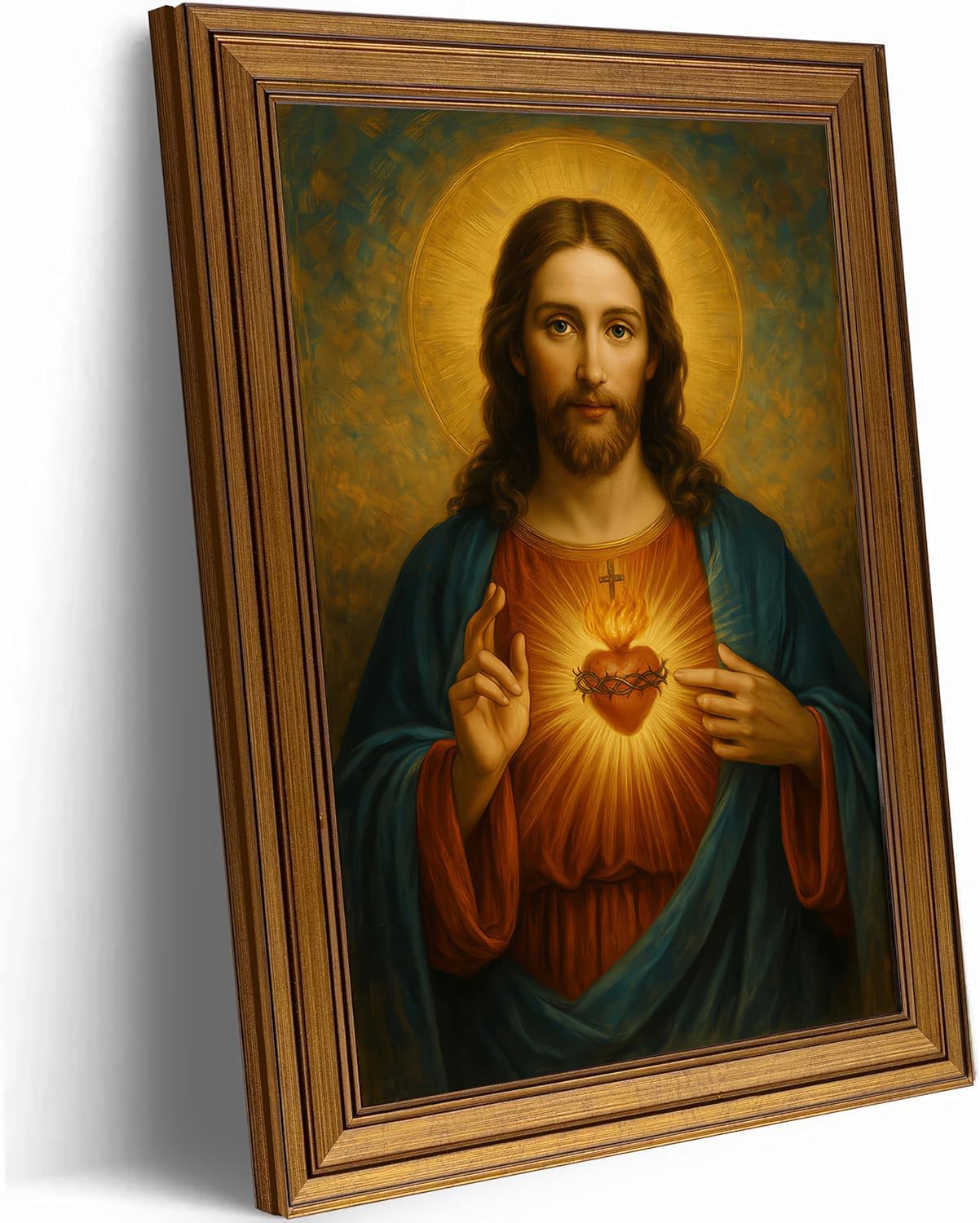
Living the Catholic faith day by day, many of us like to keep something in our homes that quietly reminds us of Christ’s presence. An Abstract Jesus painting can do that in a gentle way, adding beauty to a room while giving our hearts a place to rest for a moment. It does not replace prayer, the sacraments, or Scripture, but it can support them, like a soft light in the corner that keeps us turned toward Him.

I have found that an image of Jesus on the wall quietly changes the way a space feels. When I walk past the painting in my hallway, I sometimes pause, even if just for two seconds, and breathe a simple prayer like, “Jesus, stay with us.” That tiny interruption in the day is not dramatic, but it slowly shapes the rhythm of home life. An abstract image, especially, leaves some room for the heart to respond in its own way.
What an Abstract Jesus Painting Can Mean in a Catholic Home
In Catholic tradition, sacred images help turn our thoughts toward God. When we place a representation of Our Lord in our home, we are not decorating for decoration’s sake. We are setting aside a little corner of daily life that whispers, “Remember who you belong to.” An Abstract Jesus painting can fit into that tradition while also blending with a modern or simple style of furnishing.
Because the painting is abstract, it does not show every detail in a literal way. Instead, it often brings out certain features—the face, the eyes, the crown of thorns, the play of light and shadow. That can draw us in differently from a very realistic picture. It allows us to pray without getting caught up in tiny details, almost like meditating on a mystery of the Rosary: simple, focused, and open.
In my own experience with an Abstract Jesus painting above my desk, I sometimes look up from work and see only the line of His profile and the suggestion of light around Him. That small glimpse can be enough to remind me that all the emails and tasks are not the center of my life. Even the busiest moments belong to Him.
Using an Abstract Jesus Painting in Daily Prayer
Many Catholics like to set up a quiet spot at home for prayer: a chair, a small table, maybe a candle, a Bible, and an image of Christ. An Abstract Jesus painting can serve there as the main focal point. It does not need to be dramatic. Even a simple color palette with a gentle expression can help you settle down and remember that you are not praying into empty space. You are turning toward Someone.
Some people find it helpful to begin prayer by simply sitting in front of the painting for a minute, breathing slowly and saying a short phrase, like “Jesus, I trust in You,” or “Lord, have mercy.” The painting becomes a quiet anchor, especially on days when words are hard to find. You are not talking to the canvas, of course, but using the image to keep your mind from drifting away.
When I first brought an Abstract Jesus painting into our living room, I was surprised by how often evening prayer naturally gathered near it. We did not plan it that way, but the kids tended to sit on the couch under the painting, and soon that became the place for a decade of the Rosary or a short reading from the Gospel. The painting did not create prayer by itself, but it helped mark that space as a place where Christ is remembered.

An abstract image can also be helpful when you are praying through something difficult. You might see the colors around Christ’s face or the shadows around His eyes and quietly remember His own suffering. Without many words, you may feel encouraged to place your own crosses back into His hands. There is no promise of quick answers, but there is a deep comfort in knowing He has already walked the path before us.

Placing the Painting in Different Rooms
One of the quiet strengths of an Abstract Jesus painting is that it can fit into many different areas of the home. In an entryway, it can be the first thing you see when you come in or the last thing you see when you leave, a gentle reminder to carry Christ into your day. In a living room, it can be a central piece that silently keeps the whole space centered on Him, without overwhelming guests who may not be used to religious art.
Some like to place the painting above a small table with a candle and maybe a bowl for prayer intentions. Others hang it near a bookshelf where the family keeps Bibles and spiritual reading. The point is not perfection, but intention. By giving the painting a visible, respectful place, you are quietly saying, “Christ has a place in this home.”
In my own house, we moved our Abstract Jesus painting several times before it found its natural spot. It started in the hallway, then the dining area, and finally ended up near the staircase. That turned out to be the best location, because every time we go up or down the stairs, even in a rush, the image is there. Sometimes one of the kids will touch the frame lightly as they pass. It is not a ritual we planned; it just grew slowly because the image was present.
Abstract Style and Catholic Tradition
Some Catholics wonder how an abstract style fits into our rich tradition of sacred art. Over the centuries, the Church has welcomed many different artistic forms, as long as they help the faithful turn toward Christ and do not lead the heart away from Him. An Abstract Jesus painting stays focused on His face and presence, even when the lines and colors are more modern or stylized.
Abstract art does not have to mean confusion or chaos. Often it means simplifying down to what matters most: the expression, the light, the suggestion of the Passion or Resurrection. In this way, it is not so far from older images that also tried to capture a spiritual truth more than a photographic likeness. It can be especially helpful in homes where family members have different tastes, because it is both reverent and visually simple.
If you are curious about how Christians have used images over time, you might enjoy reading about the history of Christian art. Seeing how believers in many centuries expressed their faith through painting and iconography can make us feel part of a long, living story.
For me, what matters most is not whether the style is classical or modern, but whether it helps my heart turn toward Christ more often in the middle of a very ordinary day. My Abstract Jesus painting does that gently—nothing flashy, just a steady presence, like a friend sitting quietly in the corner of the room.
Size, Materials, and Everyday Care
When thinking about an Abstract Jesus painting for your home, practical details also matter. Many prints or canvases come ready to hang, which makes it easier to give the image a respectful place without complicated framing. Canvas textures can give a softer, more traditional feel, while smooth prints might blend well with a very modern room.
It can help to consider:
- Where the painting will hang and how far away you will usually stand when you pray.
- Whether the colors complement the light in that room—natural daylight, warm lamps, or both.
- Whether you prefer a single large focal point or a smaller image surrounded by other items, like a crucifix or family photos.
Keeping the painting clean is simple. A soft, dry cloth to remove dust from the frame or canvas from time to time is usually enough. Treat it as you would treat anything in your home that you associate with prayer—with a bit of care and respect, but without anxiety. The point is not to preserve it in a museum-like way, but to let it live in the middle of family life.


Living with an Abstract Jesus Painting Over Time
The first week after I hung our Abstract Jesus painting, I noticed small changes. I caught myself turning off the television earlier and sitting in the quiet living room for a few minutes instead. Sometimes I did not even manage a formal prayer; I just sat there, tired, looking at His face. That simple pause was enough to remind me that the Lord sees the whole day, even the parts I am not proud of, and He is still there.
Over time, the painting became part of the background of our family’s life: birthday photos with the image faintly behind us, late-night conversations on the couch underneath it, kids running past in the rush for school. It did not make us perfect or especially holy. It simply stood there, steady and quiet, the same Christ who has been patient with so many families across so many generations.
On a particularly difficult evening, when someone in the family was sick and we were worried, I remember standing in front of the Abstract Jesus painting with a cup of tea in my hands, not saying much at all. The painting did not “fix” anything, of course, but I felt less alone. It reminded me that our fears are not carried by us alone. That is the kind of companionship an image like this can offer: a steady, wordless reminder that we are held.
Offering an Abstract Jesus Painting as a Thoughtful Gift
An Abstract Jesus painting can also be a gentle, respectful gift for someone going through a transition—a new home, a marriage, a season of illness, a return to the Church, or even quiet grief. Because the style is not overly ornate, it can suit people who might feel hesitant about more traditional images but still appreciate having Christ near.
When giving this kind of painting, some people like to include a short handwritten note, explaining that they chose it so that the person would have a visible reminder that they are not alone. No strong language, no pressure—just a simple expression of care. The painting then becomes not only a piece of art, but a sign that someone is praying for them.
I once gave an Abstract Jesus painting to a relative who was quietly carrying a lot of anxiety. Months later, during a conversation, they mentioned that there were days when they did not have the strength to say a long prayer, but they would look at the painting before leaving for work and whisper, “Stay with me today.” That humbled me. The painting did not solve their problems, but it gave them a small doorway to turn to the Lord in the middle of their struggles.
Different Ways Abstract Jesus Paintings Can Look
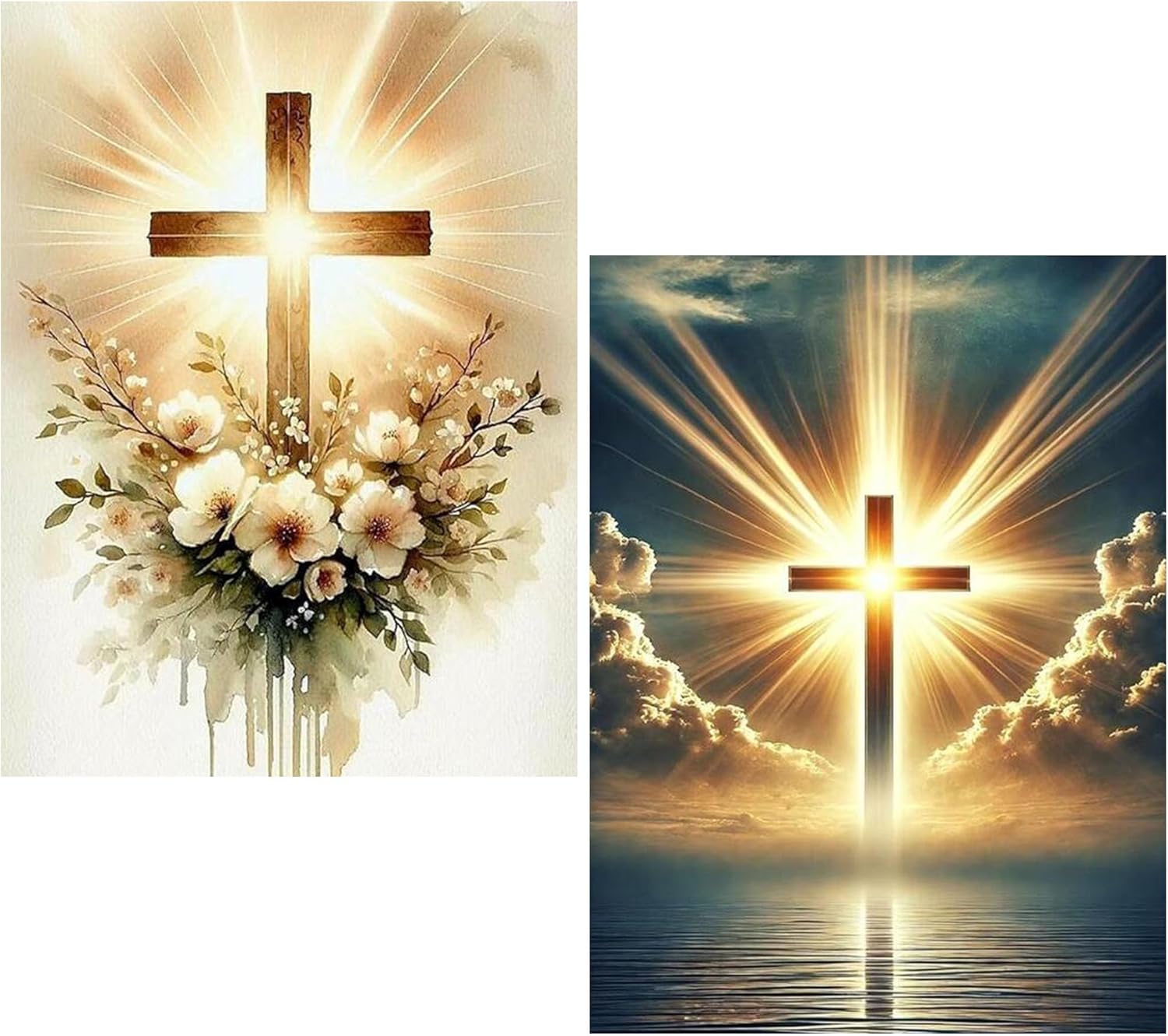
If you explore more than one Abstract Jesus painting, you will notice a wide range of approaches. Some focus strongly on the face of Christ, with clear eyes and a gentle expression, while the rest of the canvas fades into soft colors. Others bring in stronger contrasts, deeper shadows, or the suggestion of the cross and the crown of thorns. Still others highlight bright, hopeful colors around His head, hinting at the Resurrection.
This variety can be helpful for different seasons of life. During a time of trial, someone might be drawn to a painting that emphasizes Christ’s suffering and compassion. In a time of joy or renewal, a brighter, more radiant image might resonate more deeply. There is no rule here, only the quiet question: which image helps your heart turn toward Him right now?
Personally, I tend to gravitate toward paintings where Christ’s face is clear, but the background is very simple and abstract. It leaves space for my own prayer and thoughts, without too many elements competing for attention. On evenings when I light a candle nearby and sit in the semi-dark, the soft glow on the canvas has a calming effect that words do not quite capture.

Frequently Asked Questions About Abstract Jesus Paintings
Is it appropriate for Catholics to use an Abstract Jesus painting for prayer?
Yes, as long as the image points you toward Christ with reverence, an abstract style can be used by Catholics in personal prayer. The Church has a long history of welcoming different art forms, and what matters most is that the image helps you remember the Lord and encourages you to pray, not that it matches a particular style.
Where is the best place in my home to hang an Abstract Jesus painting?
Many people choose a place where they naturally pause during the day: near a favorite chair, above a small prayer table, in the living room, or along a hallway they walk through often. There is no strict rule. The best location is wherever the painting will quietly invite you to turn your thoughts to Christ, even for just a moment.
Can an Abstract Jesus painting replace other devotions, like the Rosary or Scripture reading?
No. The painting is meant to support, not replace, the heart of Catholic life: the sacraments, Scripture, and daily prayer. Think of it as a gentle reminder or companion. It can help you enter into prayer more easily, but it does not take the place of the practices that nourish your faith most deeply.
How can I use the painting during family prayer time?
You might gather the family where the painting hangs, light a candle, and begin with a short moment of silence while looking at the image. Then you can pray a decade of the Rosary, read a brief Gospel passage, or offer spontaneous prayers. Young children especially may find it easier to focus when they have a face of Christ to look toward.
What if someone in my home is not comfortable with religious images?
In that case, an Abstract Jesus painting can be a gentle middle ground, because it is both devotional and artistically simple. It may help to place it in a more personal area—such as a bedroom or private prayer corner—rather than a central shared space. Quiet respect for each person’s comfort, combined with your own faithful practice, often speaks more than words.
If you feel drawn to welcome Christ more visibly into your home through an Abstract Jesus painting, you can explore the different designs, sizes, and styles available and see which one quietly meets your heart where it is.
Let me see everything