
Catholic Jesus painting
Catholic Jesus Painting
A Catholic Jesus painting is more than decoration. For many of us, it quietly reminds us that the Lord is near in the middle of ordinary days: meals to cook, bills to pay, kids running through the house. The image does not replace prayer, but it can gently invite us to remember who we belong to, even when life feels scattered and noisy.
When I first placed a simple Catholic Jesus painting in our living room, I did not expect anything special. It was just above a small table with a candle and a Rosary. Over time, I noticed that I would pause there for a minute on my way out the door, or when I came home tired. It became a natural place to whisper a short prayer, nothing complicated, just a quiet “Lord, stay with us.”
Many Catholic homes have some kind of image of Jesus: the Sacred Heart, the Divine Mercy, Christ the Good Shepherd, or Jesus blessing a family. These paintings do not magically change us, but they help shape the atmosphere of a home. They tell visitors and children, gently, “In this house, we try to keep our eyes on Him.” Even on the days we fail, the image is still there, steady and patient.
A painting can also support the simple routines of faith: making the Sign of the Cross in the morning, saying grace before meals, praying a decade of the Rosary at night, or sitting quietly for a few minutes before bed. Many people like to place a Catholic Jesus painting in their dining area, bedroom, or by the front door, so that coming and going begins and ends with a moment of recollection.
If you are considering bringing a Catholic Jesus painting into your home, it does not have to be large or expensive. What matters most is that it helps you remember to turn your heart toward Christ in the middle of very ordinary life.

This page contains affiliate links. If you click and buy, I may earn a commission at no extra cost to you.
Let me look closerWhy a Catholic Jesus painting belongs in everyday life
In many American homes, the schedule is full and the noise level is high. It can be hard to remember to pray, even when the desire is there. A Catholic Jesus painting will not fix our distractions, but it can create a small “anchor point” in the house. When we pass by, our eyes meet His, and for a second we remember that He is not far from what we are going through.
Tradition has long encouraged sacred images not as objects to be worshiped, but as gentle windows pointing beyond themselves. The early Church, and especially the long history of Christian art, treated images as a way for ordinary people to keep their focus on the mysteries of Christ. Today, with so many screens competing for our attention, a simple, still image of Jesus can be a quiet counterbalance.
One thing I have noticed in my own home is how children naturally interact with a Catholic Jesus painting. They might wave goodnight to it, or rest a hand on the frame when they are worried about something. No one teaches them to do that; they just sense that this image represents someone who loves them. It becomes part of the language of faith that grows slowly inside a family.
A painting in the entryway can set the tone for the whole home. Walking in after a long day, seeing the face of Jesus first, reminds us that we are more than our work and our stress. Placing a painting above a small shelf with a candle and a Bible can naturally turn that corner into a simple home altar, not elaborate, just a place set aside for the Lord.
Over the years, I have moved my main Catholic Jesus painting from room to room as life changed: from a rented apartment, to a small starter home, to the place we live now. Each time, hanging it on the wall has felt like saying, “Lord, this is Your space too.” The wood and canvas are ordinary, but the intention in our hearts is what matters.
Different styles of Catholic Jesus paintings
1. The Merciful and welcoming Christ
Many modern Catholic Jesus paintings show Jesus with open hands, warm eyes, and gentle light around Him. These images can be especially comforting in a home where someone is carrying heavy burdens: illness, grief, financial stress, or quiet worries no one else sees. The painting seems to say, “You are seen. You are not alone.”
A friend of mine has a painting of Jesus with one hand on His heart and the other slightly extended, as if He is walking toward you from the frame. She keeps it near her kitchen table. When her family goes through a difficult season, she lights a candle in front of that image and sits for a few minutes before breakfast, not with many words, just sitting there and breathing in the reminder of His gentle presence.
2. The suffering Christ
Some Catholic Jesus paintings focus on the Passion: Christ crowned with thorns, or Jesus carrying the Cross. These images do not exist to shock or disturb, but to remind us that our Savior chose to enter deeply into human suffering. In houses where someone is sick, or where there is a history of wounds, these paintings can help people feel that their pain is not meaningless or ignored.
I once kept a small painting of Christ with His eyes closed and the crown of thorns around His brow on my desk at work. On difficult days, I would glance at it and remember that He understands all that a human heart can go through. It did not make my problems vanish, but it helped me not to face them as if I were completely alone.
3. The Risen and glorious Lord
Other paintings portray the Risen Christ: bright light, white garments, an open tomb. These can be beautiful in living rooms or near the front door, expressing hope and new beginning each time you step outside. They quietly remind us that death and failure do not have the final word, even if we feel stuck in the middle of some long, unfinished story.
Families who have walked through a season of sorrow sometimes choose a Risen Jesus painting for a new home, as a sign that life goes on, and that Christ walks ahead of them even when they are not sure where the path leads.
4. The Sacred Heart and Divine Mercy
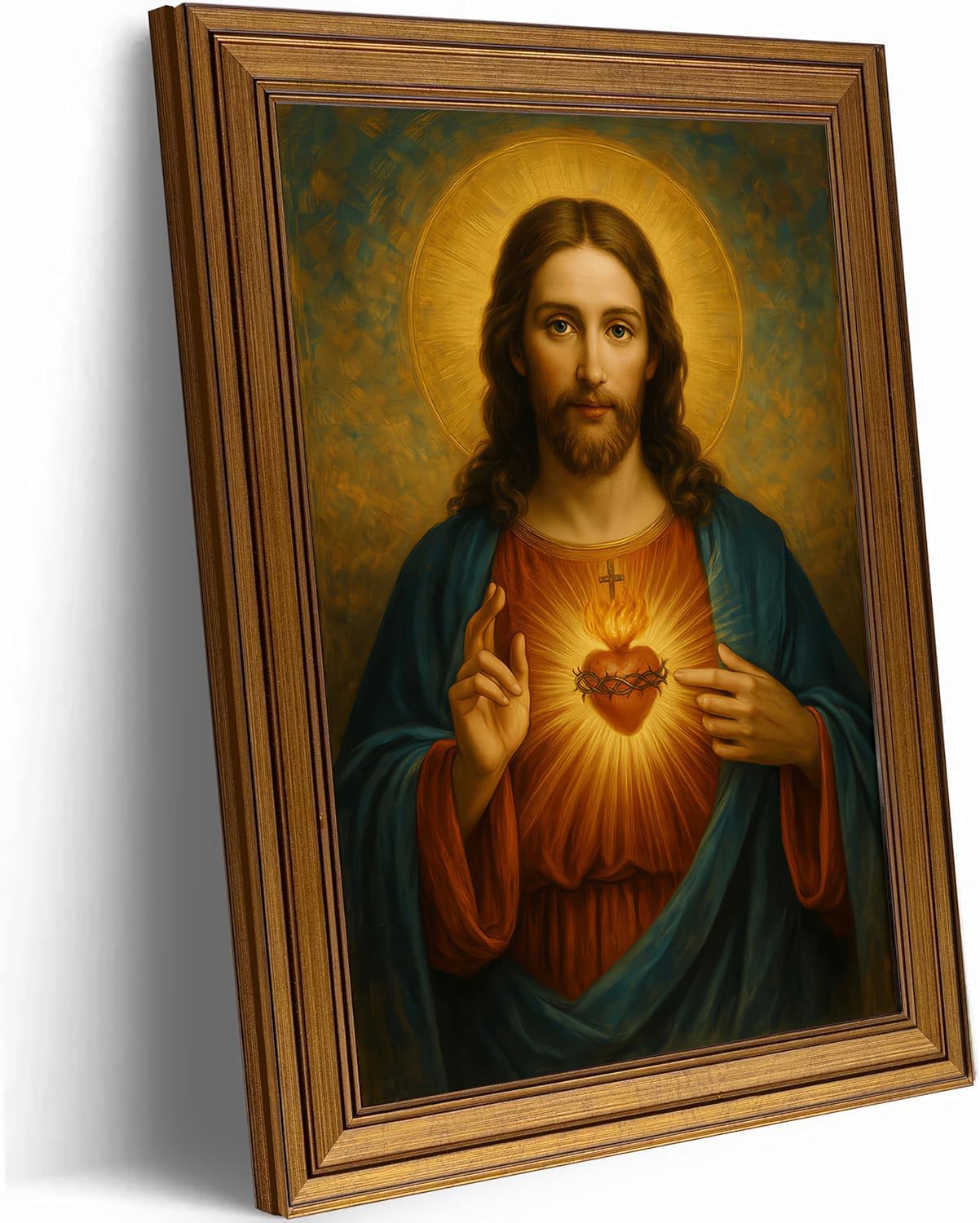
The Sacred Heart and Divine Mercy images are very familiar to many Catholics. A painting of the Sacred Heart usually shows Jesus pointing to His heart, surrounded by thorns and light, while Divine Mercy art shows red and pale rays flowing from His chest. These images fit especially well in prayer corners, bedrooms, or hallways where a family likes to pause for a short prayer.
In my own life, one of the first Catholic Jesus paintings I ever owned was a small Divine Mercy print in a simple frame. I kept it near my bed as a young adult. On nights when I could not sleep, I would sit on the edge of the bed and quietly repeat, “Jesus, I trust in You,” while looking at that image. It did not solve every fear, but it gently turned my fears in His direction instead of letting them swirl around inside me.
5. Jesus with children or families
Paintings that show Jesus surrounded by children, or blessing a family, are especially meaningful in homes where parents are doing their best but sometimes feel overwhelmed. These images can be a way of placing the whole family under His care, without many words. Children often find these scenes easier to relate to, because they see people who look like themselves in the picture.
One family I know keeps a painting of Jesus with children right at the bottom of their staircase. Every morning, as the kids come down for breakfast, they see that image. Sometimes they stop and touch the frame before heading into the day. It is a small ritual, but over the years I suspect it will shape how they understand the Lord’s tenderness toward them.
Placing a Catholic Jesus painting in your home
Choosing where to place a Catholic Jesus painting is a personal decision. There is no strict rule, only the invitation to think about where you most need a visual reminder of His presence. Some people prefer a central place where everyone passes daily; others choose a more quiet area for personal prayer.
The living room is a common place, especially if it is where the family gathers most evenings. A painting on the main wall can gently guide conversations and decisions. It becomes normal, over time, to glance at Jesus before answering in anger or before making a big choice.
Bedrooms are another natural location. A Catholic Jesus painting above a dresser or beside the bed can support a simple nightly routine: turning off screens, dimming the lights, and spending a short moment in silence, perhaps with a brief Scripture verse or a quiet Our Father. The painting does not need to be the center of attention, only a humble companion to those minutes of quiet.
Some people like to establish a small prayer corner with a crucifix, a Catholic Jesus painting, a candle, and maybe a Rosary or small statue. This does not have to be elaborate. Even a simple shelf or corner table is enough. What matters is that it is used: a place where you really stop, breathe, and speak heart-to-heart with the Lord, even if it’s only for a few minutes a day.
I have noticed that when guests come over, a visible Catholic Jesus painting often opens gentle conversations. Not debates, not arguments, just simple comments like, “That’s a peaceful picture,” or “My grandmother had one like that.” From there, people sometimes share a small memory of faith from their own past. The painting quietly does its work, one heart at a time, without any pressure.
Examples of Catholic Jesus paintings for home and prayer
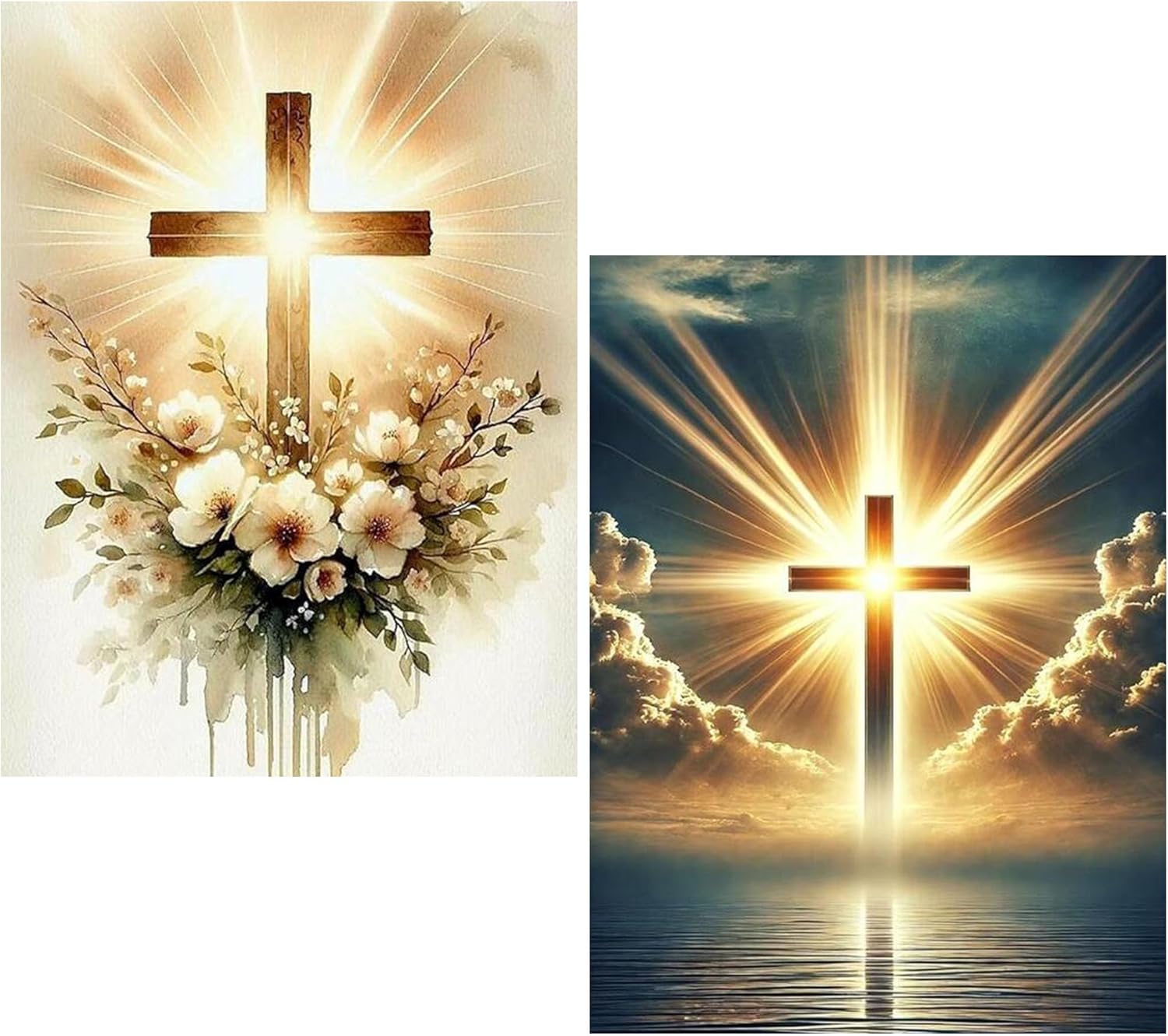
Below are different visual approaches to Catholic Jesus paintings that many people find helpful in their daily prayer life. Each one lends itself to a slightly different corner of the house, but all of them point in the same direction: toward Christ at the center of everything.





Living with a Catholic Jesus painting over the years
A Catholic Jesus painting is not something you notice every minute. In fact, on many days you might barely look at it. But over the years, it quietly shapes the atmosphere of a home. It becomes part of the background of life, the way a familiar tree outside your window is always there, even when you are not paying attention.
I remember a particular season when I was going through a painful situation that left me feeling embarrassed and small. During that time, I often sat on the couch under our Catholic Jesus painting in the evening after everyone else had gone to bed. Sometimes I would simply sit there in silence, with all the lights off except a small lamp. I did not have many words; I just knew that His gaze, even represented only in paint and color, reminded me that my dignity did not depend on my success or failure.
Over time, the frame gathers dust, the colors may fade slightly, and you might change furniture around it. But the intention behind placing that painting remains. It says that in this house, even with all its imperfections and sins and arguments and reconciliations, there is a place for Christ at the center. That commitment is far more important than the specific style or size of the artwork.
As children grow up and leave home, many take with them a memory of a Catholic Jesus painting in a particular room: the hallway where Mom used to pause with her hand on the wall, the corner where Dad sat with a Rosary on Sunday afternoons, the bedroom where someone cried quietly after a loss. Those moments are held, in a small way, by the presence of that image.
Even for those who live alone, a painting of Christ on the wall keeps the awareness that life is shared with Someone, even when the house is very quiet. In the stillness of early morning or the quiet of night, the image can help us turn loneliness into a kind of companionship with the Lord, without dramatic gestures, simply by being honest in His presence.