
Classic Jesus painting
Classic Jesus Painting
A Classic Jesus painting has a quiet way of shaping the tone of a home. It does not need to be large or dramatic. Often it is simply there, watching over the ordinary things of daily life: the keys on the table, the school backpacks by the door, the pile of mail. For many Catholics in the United States, a familiar image of Jesus on the wall is less about decoration and more about remembrance.
When I first brought a Classic Jesus painting into my own apartment, I did not know exactly where to put it. It stayed leaning against a bookshelf for a few days. One evening I moved it above a small table where I usually drop my phone and wallet. That simple change nudged me into a different habit: before leaving the house, I pause for just a second and look up. No long words, just a small moment of turning my heart toward the Lord.
Over time, the painting has become part of the rhythm of our family life. Kids rushing through the hallway, a late-night glass of water in the kitchen, a tired return home after a long commute—every movement passes under that calm, steady gaze. A Classic Jesus painting does not solve problems or make life easy, but it gently reminds us who walks with us in the middle of everything.

This page contains affiliate links. If you click and buy, I may earn a commission at no extra cost to you
What a Classic Jesus painting means in a Catholic home
In many Catholic families, a Classic Jesus painting is one of the first religious images to appear on the wall. It might be a gift from parents or grandparents, a print discovered on a pilgrimage, or something simple ordered online when someone moves into a new place. The style can vary, but the intention is often the same: to keep Jesus visibly present in the middle of daily life.
A traditional image like this is not meant to replace prayer, the sacraments, or the life of the Church. It is more like the family Bible on the shelf or a rosary on the nightstand—a small, physical reminder that faith is not only for Sundays or special moments, but for the ordinary Tuesday evenings as well. When the day feels scattered, catching sight of that familiar face can quietly draw the heart back to God.
The idea of keeping a sacred image at home is very old. Many Christians have chosen to place paintings or icons of Christ in their houses so that their faith is woven into the spaces where they cook, rest, and welcome guests. Even the simple act of dusting the frame or straightening a slightly crooked picture can become a tiny act of love offered to God.
The style “classic” usually suggests something that does not chase trends. A Classic Jesus painting often carries gentle colors, a calm expression, and a sense of peace that does not depend on the latest artistic fashion. Because of that, it tends to age well in a home. It feels as natural in the house of a young couple just starting out as it does in the living room of an older family that has seen decades pass.
I remember visiting my aunt as a child and being struck by the painting of Jesus that hung in her dining room. The frame was simple, the colors slightly faded, but it left a strong impression. Many years later, when I brought my own Classic Jesus painting into my home, I realized how much that early memory shaped my desire to have a similar presence in my daily surroundings.
Where to place a Classic Jesus painting at home
Choosing where to hang a Classic Jesus painting is a personal decision. There is no rulebook for it, but the place you choose can affect how naturally the image becomes part of your day. Some people prefer a very visible spot, like the main wall of the living room. Others pick a more quiet corner, such as a small prayer area or hallway.
Common places where Catholics often hang a Classic Jesus painting include:
- Near the front door: to pause briefly when leaving or returning home, perhaps to trace the sign of the cross or to whisper a short prayer.
- In the dining area: to remember the Lord’s presence around family meals, celebrations, and even those hurried breakfasts before work or school.
- Above a small prayer table: where you might keep a Bible, a rosary, or a candle, turning the corner into a simple home altar.
- In a bedroom: so the last and first glance of the day can rest on Christ’s face.
In my home, the Classic Jesus painting ended up in a place I did not expect: between the kitchen and the hallway. People cross that spot constantly. I realized that I see the image most often when I am not “trying” to pray at all— carrying laundry, chasing after a ringing phone, or grabbing a cup of coffee. Those accidental glances have become part of my ordinary way of remembering the Lord.
For some, it also feels important to pair the painting with other small signs of faith: maybe a crucifix nearby, or a small statue of Mary, or a framed Scripture verse. It does not have to be elaborate. Even a simple candle that you light on Sunday or during a quiet evening can help mark the space as a place of gentle reverence.
If you are unsure where to begin, you might simply place the Classic Jesus painting somewhere you naturally pass often. Live with it there for a few weeks. Notice when your eyes are drawn to it and what it stirs in your heart. Over time you may find a better spot, or you may discover that the first place was exactly right.
Exploring several Classic Jesus painting designs
When people speak of a Classic Jesus painting, they can mean many different visual styles. Some images show Jesus with His hand raised in blessing. Others highlight His Heart, His face, or His gentle gaze. While styles differ, the deeper desire is usually the same: to keep His presence near.

Some paintings feature rich, warm colors and detailed backgrounds. Others keep the focus almost entirely on the face of Christ. In our fast-moving culture, there is something grounding about an image that invites stillness instead of noise. The more time you spend with a painting, the more small details you begin to notice—folds in the clothing, the way the light touches the eyes, the position of the hands.
I have found that certain versions of a Classic Jesus painting speak more deeply to me than others, without my being able to fully explain why. One might feel softer and more tender; another might come across as strong and steady. When that happens, I simply take it as a quiet nudge: perhaps the Lord knows how I most need to see Him in this season of life.

Frames also matter. A heavy, ornate frame may feel right in some homes, especially those that already have traditional furniture or older wooden pieces. In a more modern apartment, a simple, clean frame might blend more naturally. The main thing is that the frame should not distract from the face of Jesus but gently support it.
There is a long history behind Christian images of Christ. If you are curious, you might explore the story of how Christians have portrayed the Lord over the centuries in classic Christian art. Knowing that believers across time have also turned their eyes to painted images of Jesus can make your own humble picture feel like part of something larger than your own home.
In our family, we ended up choosing a Classic Jesus painting with softer colors and a very peaceful face. Guests often pause and look at it without saying anything. Every once in a while someone will quietly share, “I grew up with a similar picture in my parents’ house.” Moments like that remind me how deeply these simple images are woven into the memories of many Catholic homes.
Praying with a Classic Jesus painting
A Classic Jesus painting can gently shape the way we pray, especially at home. It is not a requirement for prayer, of course, but it can help the heart focus when words feel dry or scattered. Sometimes just sitting in silence in front of the image, breathing slowly, can be enough.

Some simple ways Catholics often pray with a Classic Jesus painting include:
- Taking a short pause before leaving the house, perhaps saying, “Jesus, stay with me today,” or simply standing for a moment in quiet.
- Ending the evening with a brief look at the painting before going to bed, entrusting the day to the Lord with a few honest words.
- Placing the painting near where you pray the rosary, letting the gaze of Jesus accompany the mysteries.
- Sitting with a cup of coffee in the morning, reading a small passage from the Gospel while the picture is in sight.
I remember one particularly heavy week when several things went wrong at once—health concerns in the family, financial worries, and tension at work. I did not have the energy for long prayers. I simply sat on the couch and looked at the Classic Jesus painting on the wall for a few minutes, telling Him quietly, “You see everything. I do not know what to do.” That simple act did not erase the problems, but it helped me trust that I was not carrying them alone.
For children, a visible image of Jesus can be especially helpful. They may not follow complex explanations, but they can connect with a gentle, familiar face. Some parents tell their children, “You can talk to Jesus here whenever you want.” Kids often take that invitation very literally and will walk up to the painting to share their joys and worries in their own words.

While praying with a painting can be meaningful, it is important to remember that our faith is grounded above all in Christ Himself, in His living presence—especially in the Eucharist—and in the life of the Church. A Classic Jesus painting is simply one more way, among many, that a Catholic household can keep its eyes turned toward Him in the middle of the ordinary week.
How a Classic Jesus painting quietly shapes the atmosphere at home
Over months and years, a Classic Jesus painting can become almost like another quiet presence in the home. Not in a mystical or dramatic way, but in the sense that it “oversees” the flow of everyday life: laughter, disagreements, celebrations, and ordinary chores.
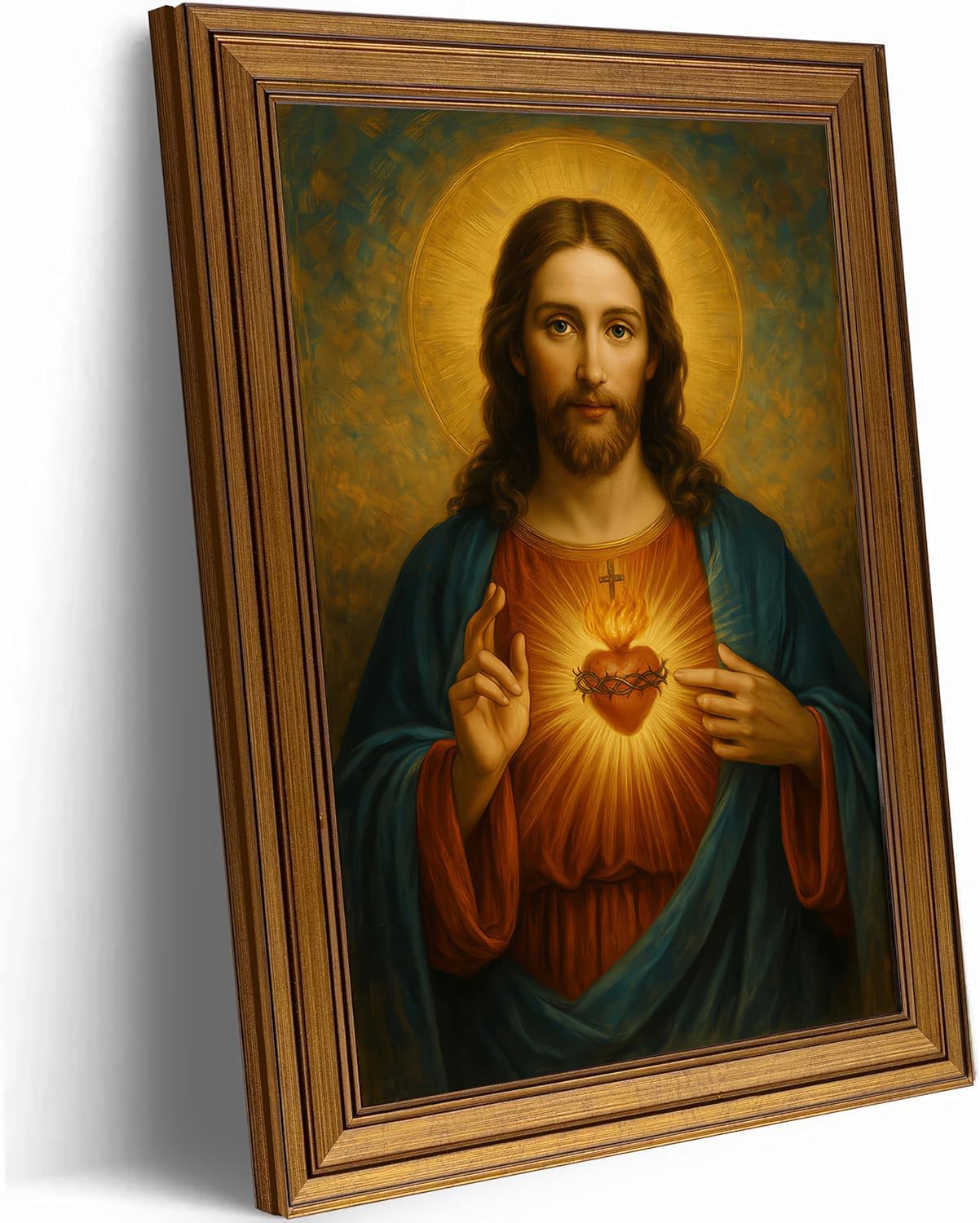
I have noticed that when we argue or feel tense at home, the presence of the painting has a subtle effect. It does not magically fix anything, but, once tempers calm down, it is often the image of Jesus that draws my eyes. More than once, that has gently pushed me to apologize sooner than I might have otherwise, or to remember that the person in front of me is also deeply loved by God.
Guests sometimes react in different ways. Some ignore the painting completely. Others ask where it came from or share a memory from their own upbringing. A few simply fall silent for a moment, as if something within them is stirred. I try not to interpret those reactions too much. I simply hope that, for whoever enters our home, the Classic Jesus painting might be a small reminder that God’s love is near.
Even on ordinary days—making dinner, folding laundry, scrolling through emails—the image can gently question our choices. It might nudge us to be a little more patient, a little more honest, a little more attentive to the people in front of us. Again, there is no automatic result here, just a quiet invitation to live as someone who knows they are seen and loved.

Sometimes, when I am tempted to rush through prayer or skip it entirely, that familiar face on the wall seems to ask, without any words, “Do you have a minute?” It is not a feeling of guilt or pressure, more like the gentle reminder of a friend who has been patiently waiting for you to sit down and talk.

Over the years, a Classic Jesus painting can gather its own history: the move to a new city, the birth of a child, the difficult seasons, the holidays shared with relatives. If the frame becomes worn or the colors fade a bit, the image can carry all those memories quietly. It stands as a kind of silent witness that, through everything, Christ has remained present.
Frequently asked questions about having a Classic Jesus painting at home
1. Is it okay for a Catholic to pray in front of a Classic Jesus painting?
Yes. Catholics have long used sacred images to help focus their hearts and minds in prayer. The painting itself is not the one being worshiped; rather, it points the heart toward Jesus Himself. Many people find that having a Classic Jesus painting nearby can make it easier to gather their thoughts and turn their attention to God, especially in the middle of busy family life.
2. How can I respectfully display a Classic Jesus painting with other decorations?
A good approach is to give the painting a place of quiet honor, without crowding it too closely between random items. You can keep the area simple—a crucifix nearby, perhaps a small candle or a Bible on a nearby shelf. It does not need to look like a museum. The main thing is that the image is treated with respect and not placed where it is likely to be damaged or covered up.
3. What size Classic Jesus painting works best in a small apartment?
In smaller spaces, a medium or modest-sized painting often works best. It should be large enough to be seen clearly, but not so big that it overwhelms the room. Some people choose a size roughly similar to a standard framed family photo or diploma. Placing it at eye level on a wall you naturally face—like near the dining table or beside a reading chair— can help it feel present without dominating the room.
4. How do I keep a Classic Jesus painting from becoming “invisible” over time?
It is normal for anything on the wall to blend into the background after a while. One simple practice is to intentionally pause before the painting at certain moments: before leaving for work, after coming home, or before going to bed. You might also gently clean the frame or glass from time to time, offering that small act as a quiet gesture of love. Moving the painting to a new, thoughtful location in the house can also renew your awareness of it.
5. Is a Classic Jesus painting appropriate as a gift for sacraments or special occasions?
Many Catholics choose to give a Classic Jesus painting for moments such as a wedding, First Communion, Confirmation, or when someone moves into a new home. It can serve as a lasting reminder of the Lord’s presence in that new chapter of life. If you offer such a gift, you might include a short handwritten note explaining why the image is meaningful to you and how you hope it will quietly bless their home.