
Dancing with Jesus painting
Dancing With Jesus Painting
A Dancing with Jesus painting can feel surprising at first glance, yet for many of us it has become a gentle reminder that Christ is close to our ordinary joys, not only to our sorrows. On this page I’d like to share how this kind of image can fit into a normal Catholic home, without pressure, without big promises, just as a quiet companion to daily prayer and family life.

This page contains affiliate links. If you click and buy, I may earn a commission at no extra cost to you
What a Dancing With Jesus Painting Can Mean at Home
When people first hear about a Dancing with Jesus painting, some smile, some hesitate, and some honestly feel unsure. I understand that. In the Catholic tradition we are used to more solemn images of Christ: the Crucifix, the Sacred Heart, icons, and quiet portraits. An image of Jesus dancing can feel almost too informal at first.
Yet art has always reflected different moments of the Gospel: not only the Passion, but also the wedding at Cana, shared meals, and the joy of the Resurrection. A painting of Jesus dancing doesn’t replace those classic images. Instead, it can gently remind us that the Lord also rejoices, that heaven is not only a place of consolation but also of deep, steady joy.
One evening I placed a Dancing with Jesus painting on a small shelf near our dining table, just to see how it felt. I didn’t announce anything to my family. Over the next weeks, I noticed that conversation around that corner became a little lighter. Nobody treated it like a joke, but we all seemed a bit freer to talk about our days, including the good things, without feeling guilty for being happy.
In my experience, the key is intention. A Dancing with Jesus painting is not about making faith silly. It can be about remembering that joy, music, and even dancing are not far from God’s heart. When we use the image with reverence, it naturally stays within the boundaries of our Catholic sensibility.
Joy, Reverence, and Balance in Catholic Art
Catholic homes often hold a variety of sacred images: a crucifix above a doorway, a Marian statue on a dresser, a small icon on a bedside table. A painting where Jesus is dancing may simply become one more piece in this quiet mosaic, pointing to a different aspect of His presence.
The Church has always used art to express truths that words alone cannot handle. Think of the mosaics in old basilicas, or the joyful scenes in stained glass windows. Even in the Middle Ages, people loved depictions of feasts, processions, and communal celebrations of faith. That same spirit of joy can be reflected, in a small and modern way, in a Dancing with Jesus painting.
Some people worry that such an image could be irreverent. That concern is valid and deserves respect. In my own home, I handle this by making sure the painting is:
- Placed in a clean and intentional spot, not hidden among clutter.
- Surrounded, when possible, by other devotional items, so it feels part of prayer, not a stand-alone gag.
- Approached with the same quiet respect I give to my other religious images.
When those things are in place, the painting doesn’t feel out of line. It feels like a reminder that the Lord can be close even when life is lighthearted, not only when we are on our knees or in crisis.
For some, seeing Jesus depicted with a touch of everyday humanity recalls the mystery of the Incarnation, the fact that He truly entered our world and shared real human experiences. It can echo, in a simple way, the joy that Christians associate with the Resurrection, without trying to replace richer traditional images.
Personal Ways to Use a Dancing With Jesus Painting
Over time, I’ve seen a few simple, calm ways that a Dancing with Jesus painting can fit into ordinary Catholic life. None of them are magical formulas, just gentle habits that many believers might find helpful.
A Corner for Gratitude
One way is to place the painting in a corner dedicated to gratitude. Next to it you might keep a small notebook, a rosary, or a candle. At the end of the day, you can sit for a few minutes and quietly recall three good things that happened. They don’t have to be big: a kind word at work, a moment of laughter with a child, a peaceful commute.
When I started doing this, the painting became a visual nudge, almost like Jesus inviting me to notice the small signs of goodness I tend to overlook. I didn’t feel forced to be cheerful; I just felt gently invited to see that the day had not been entirely dark.

A Soft Presence in a Busy Room
Many of us spend a lot of time in one place: the kitchen, a small office corner, or a shared living room. Hanging a Dancing with Jesus painting there can turn that space into something more than just functional. Without saying a word, the image can remind us that we are not alone in our tasks.
I once kept a Dancing with Jesus painting on the wall above my work desk. On stressful days, when emails piled up and problems multiplied, a quick glance upward reminded me to breathe, to slow down, and to remember that my work is seen by God, even if nobody else notices the effort behind it.
A Gentle Conversation Starter with Children
Children often respond strongly to images. A dancing Jesus can open up simple conversations about joy, heaven, and what it means that Christ is “with us.” Instead of heavy lessons, the painting can prompt natural questions:
- “Why is Jesus dancing?”
- “Do you think God is happy when we dance or sing?”
- “When do you think Jesus is most glad to be close to you?”
These are not theological debates; they are gentle, childlike reflections that can grow into a lifelong sense that God is near in both tears and laughter.
Different Styles of Dancing With Jesus Paintings
Not every Dancing with Jesus painting looks the same. Some are quite humorous, others are more subtle and reverent. When choosing one, I find it helpful to think about the general atmosphere of my home and my own comfort level.
Lighthearted and Cartoon-like Styles
Some paintings show Jesus in a very playful, almost cartoon form. These might fit well in:
- A youth room or teen area where humor is part of how faith is discussed.
- A rec room or casual family space where people gather to relax.
- A corner where you intentionally keep things light and welcoming.
If you lean toward a more traditional mindset, it can help to place this sort of image where it will not be confused with strictly liturgical or formal art, such as the family crucifix or a home altar.

More Reverent or Minimal Styles
Other versions soften the playful tone and focus instead on movement, light, and warmth. These can blend more easily with classic Catholic images. They might show:
- Jesus in flowing robes, with gentle colors and soft gestures.
- Light and shadow used to express hope rather than comedy.
- Joy that feels peaceful rather than silly.
A Dancing with Jesus painting like this may work well in a prayer area, near a favorite armchair where you pray the Rosary, or even in a hallway that leads to the bedrooms, as a reminder of God’s presence over the household.
Canvas Prints, Framed Pieces, and Posters
You will find this style of image in many formats:
- Canvas prints that feel more like gallery art and are easy to hang without extra framing.
- Framed prints that arrive ready to place, often with a finished, sturdy look.
- Posters that are lightweight and simple, suitable for informal spaces or temporary setups.
Each format has its own feel. Canvas can feel a bit more permanent, while a simple poster might suit a student, a dorm room, or a parish youth space where things move around often.
My Own Experience Living with This Kind of Image
My first Dancing with Jesus painting was actually a gift. A friend, knowing I loved both prayer and music, handed me a wrapped frame with a smile that said, “Trust me.” When I opened it and saw Jesus mid-step, I honestly didn’t know how to react. Part of me laughed; another part wondered if this was appropriate in my home.
For a while I left it leaning against a bookshelf, unsure what to do. One Sunday afternoon, after a particularly heavy week, I finally hung it in the hallway that leads from the kitchen to the bedrooms. I walked past it several times a day. Slowly, my discomfort faded, and something gentler appeared: a sense of relief, like a quiet reminder that heaven is not constantly frowning at us.

On days when I felt burdened, passing that image did not erase the problems, but it tempered them. It reminded me that following Christ includes crosses, yes, but also a promised joy that the world cannot fully take away. The painting became, in its own small way, a signpost toward that promise.
Over the years, I’ve moved the painting to different rooms as life changed: near the piano when a child was learning to play hymns, by the entryway during a season of many goodbyes and reunions, and once in a small office where I was facing uncertain work decisions. In each place, the image quietly echoed the same thought: “You are not walking alone, even when your steps feel clumsy.”
I don’t think everyone must have a Dancing with Jesus painting. But for those who feel drawn to one, it can become an honest companion, bridging faith and daily life in an unexpected way.
Placing a Dancing With Jesus Painting with Respect
Because we are used to more formal religious images, it can help to think carefully about where and how to place this painting so that it feels respectful and not out of place.
- Keep it out of chaotic spots. If possible, avoid hanging it where things pile up or where the image would be half-hidden behind jackets or random objects.
- Consider lighting. A softly lit corner, near natural light or a small lamp, can make the painting feel more like part of a prayerful environment.
- Pair it with other devotional items. A nearby crucifix, rosary hooks, or a small holy water font can naturally remind everyone that this is still a space of reverence.
- Respect different sensitivities. If some family members find the image difficult, it may be kinder to place it where it will not cause them constant discomfort, or to talk openly about how each person experiences it.
In my own extended family, reactions to the Dancing with Jesus painting have been mixed. A few relatives loved it immediately, while others needed time. Honest conversations helped. We spoke less about art criticism and more about the deeper longing behind it: the hope that Christ is close to us in every honest emotion, including shared laughter.

Everyday Catholic Practices Around the Painting
A Dancing with Jesus painting doesn’t require special devotions. It can simply accompany the ordinary practices many Catholic families already have.
- Morning offering. Pausing for a brief morning prayer near the image can help connect the work and responsibilities of the day with Christ’s presence.
- Evening examen. Some people like to review their day in God’s presence before bed. Sitting where the painting is visible can make that time feel a little less heavy, especially when remembering difficult moments.
- Rosary or quiet reading. If you have a favorite chair for prayer, placing the painting within sight can turn that chair into a small “prayer corner” without major rearrangement.
- Music and family gatherings. When you host family dinners or small gatherings, the image can silently remind everyone that faith need not disappear when the music begins or the conversation turns lively.
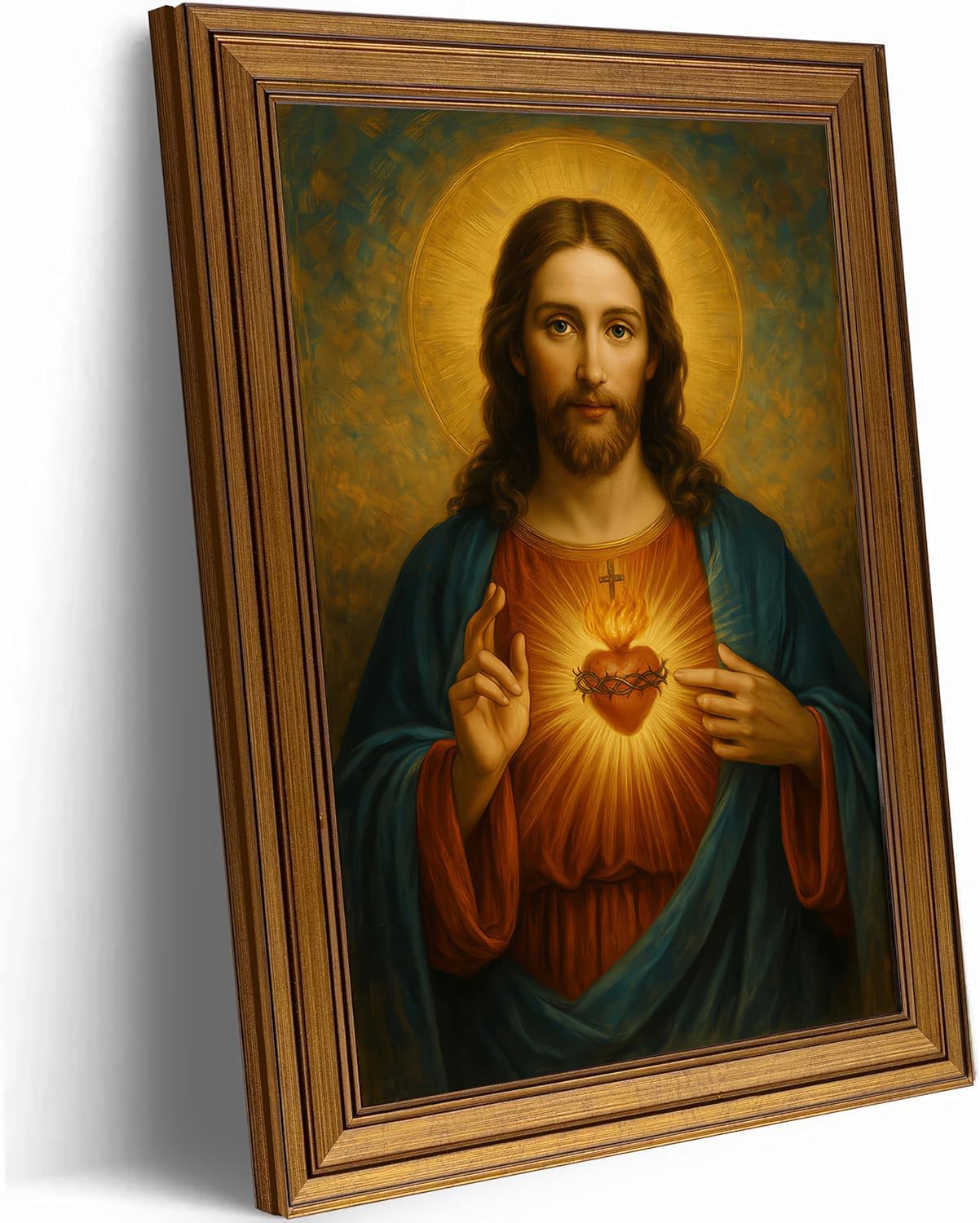
My own experience is that these very ordinary practices—short, sincere prayers, brief pauses of gratitude, a few minutes of silence—shape the way we see the painting, and the way we see our home. Over time, the image becomes part of a familiar background of faith, not a novelty on the wall.
Giving a Dancing With Jesus Painting as a Thoughtful Gift
Some people consider a Dancing with Jesus painting as a gift for friends or family. Because reactions can vary, a little sensitivity goes a long way. It may be lovingly received by someone who:
- Has a playful personality and already enjoys creative expressions of faith.
- Works in youth ministry or with teens and needs gentle, approachable imagery.
- Is going through a heavy season and might welcome a quiet reminder of joy.
When I have given this kind of painting, I usually include a handwritten note explaining why I chose it: not to make light of suffering, but to express hope that Christ is present even in unexpected smiles. That small explanation can help the recipient see the heart behind the gift.

FAQs About a Dancing With Jesus Painting
Letting Joy and Faith Meet Quietly
A Dancing with Jesus painting will not solve problems or replace the deeper practices of the Catholic life: the sacraments, Scripture, and daily prayer. But it can sit quietly alongside them, like a soft reminder that the God who walks with us also rejoices over us.
If you decide to welcome such an image into your home, you might simply ask, in your own words, that God would help you live with a more trusting heart—able to carry both cross and joy. Over time, that simple picture on the wall may become part of the way your home quietly breathes faith.
