
When I first placed a Face of Jesus painting in our living room, I did not expect anything special to happen. I just wanted something simple on the wall that would gently turn my mind toward the Lord during the day. Over time, I noticed that whenever I passed by that corner, I would pause for a very short inner prayer, sometimes nothing more than, “Lord, stay with us.” It was a small, steady reminder woven into normal life—children’s toys on the floor, dishes in the sink, and that image looking quietly over it all.

This page contains affiliate links. If you click and buy, I may earn a commission at no extra cost to you.
A Face of Jesus painting is not a decoration in the usual sense. For many Catholics it becomes more like a familiar face in the house, a way to hold on to a sense of His nearness while life keeps moving. We do not worship the canvas, of course; we simply let the image point our hearts beyond itself, the same way a family photo points beyond paper and ink to the person we love.
One thing I’ve learned is that the best image is usually the one that feels honest and peaceful to you. Some people prefer a more traditional icon-like representation, others are drawn to a softer, more human expression. There is no need to analyze it too much. If an image quietly draws you to prayer, if it makes it a little easier to remember the Lord during the noise of the day, that is often enough.
Living with a Face of Jesus painting in everyday life
In many Catholic homes, a Face of Jesus painting ends up in a place where people naturally gather: the dining room, the living room, or near the front door. That way, the image becomes part of the natural flow of the day. You might glance at it during your morning coffee, when you come home from work, or while you sit quietly in the evening after the house settles down.
In our home, the painting is near the table where we have meals. Before grace, it helps me remember that we are not just eating together, but sitting at the Lord’s table in some small way. I do not always have deep feelings when I see it; often it is just a steady presence in the background, like a gentle friend in the room. Over the years, that steady familiarity has meant more than any big emotional moment.

Sometimes, I notice our children glance up at the painting during dinner conversations. They do not always say anything about it, but every so often one of them will ask a question: “Why does His face look so calm?” or “Does Jesus really see us all the time?” Those questions open quiet, honest conversations that I don’t think we would have as naturally without that image on the wall.
A Face of Jesus painting can also create a small sense of continuity between Sunday Mass and the rest of the week. After coming home, when my mind is still half in the church and half in the week ahead, seeing His face in the house reminds me that what we do on Sunday is meant to flow into Monday and beyond. It does not fix all my distractions, but it helps me remember that faith is meant to live in the same space as laundry, homework, and bills.
Choosing a style that fits your prayer
There are many different ways artists portray the Lord’s face: some with strong, intense features; others with softer, more tender lines; some very realistic, others more symbolic. When I first looked for a Face of Jesus painting, I felt overwhelmed by the options. What finally helped me was to pay attention to which image made me feel like I could stand before it honestly, without pretending to be more “spiritual” than I am.
For me, that meant a fairly simple, traditional image with gentle colors, not too dark, not too bright. I wanted something that would not dominate the room, but would quietly invite me to pause. When you look for an image, you might ask yourself a few simple questions:
- Do I feel drawn to quiet prayer, even for a moment, when I look at this face?
- Could I sit in front of this image on a tired day and still feel at peace?
- Does this style fit naturally with the rest of our home, so it doesn’t feel forced?

Some Catholics like to connect their Face of Jesus painting with traditional images such as the Veil of Veronica, where the Lord’s face is said to have been imprinted on a cloth during His Passion. Others simply prefer a more modern style that still carries a sense of reverence. Both approaches can be deeply respectful; what matters most is that the image helps you remember Him with sincerity.
Over time, you may find that the specific details of the painting matter less than the habit of turning your heart toward the One it represents. The colors may fade a little, the frame might get a small scratch, but the regular act of pausing before His face, even briefly, can become part of the quiet rhythm of your days.
Creating a small prayer corner at home
Many families like to place their Face of Jesus painting in a dedicated prayer corner. This does not need to be elaborate. A simple chair, a small table, perhaps a candle or a rosary nearby, and the painting on the wall can be enough. The goal is not to build a perfect space, but to set aside a spot where it is a little easier to be still.
In our house, we chose a modest corner near a window. The painting hangs above a small table that holds a Bible, a rosary, and a few prayer cards. On busy days, I might only sit there for a minute or two, sometimes just long enough to take a breath and say, “Lord, You know everything; You see everything; stay with us.” There are also days when I simply look at His face while passing by and keep going. Both kinds of moments have their place.

If you are starting a prayer space for the first time, it might help to keep it simple and uncluttered. A single Face of Jesus painting, maybe with a small crucifix or a Marian image nearby, can be enough. You can add other things over time if you feel they help, but there is something powerful about a clean, focused place where your eyes naturally rest on the Lord’s face.
I have noticed that this little corner becomes especially meaningful during difficult seasons—illness in the family, worries about work, or times of grief. Sitting in front of the painting does not remove the burden, but it gives me a place to bring it. Sometimes I sit in silence, sometimes I quietly speak my worries, and sometimes I let the tears come. The image does not answer, of course, but it reminds me that I am not carrying things alone.
Personal ways to pray before a Face of Jesus painting
There is no single “right” way to pray before a Face of Jesus painting. Some people like to pray formal prayers such as the Our Father, the Hail Mary, or the Divine Mercy Chaplet. Others simply sit in silence and rest, letting the heart speak without many words. Over the years, I have tried different approaches, and they have each served me in different moments.
On rushed mornings, I sometimes just stand in front of the painting for fifteen seconds before leaving the house. I look at His face and say something like, “Lord, please be with me and with everyone I meet today.” It is a small gesture, but it sets a tone for the day. On quieter evenings, I might sit longer, reading a short passage from Scripture and then lifting my eyes to the painting, letting the words sink in as I meet His gaze.

One very simple practice I like is to bring a single intention each time I look at the painting: one person, one situation, one fear, or one thanksgiving. I quietly place it before the Lord in my heart, without trying to find perfect words. Over time, the painting becomes linked with that habit of entrusting things to Him, little by little.
Another small tradition in our family happens on Sundays. After coming home from Mass, we sometimes gather for a few minutes by the painting, especially during Advent and Lent. We might light a candle, say a short prayer, and then each person shares something they are thankful for or something they are worried about. The painting, with His calm face, gives us a visible center for that moment of sharing and prayer.
Respectful care for a Face of Jesus painting
Because a Face of Jesus painting is more than just wall art for many Catholics, it is natural to treat it with a bit of reverence. That does not mean we need to be nervous around it, but we can handle it with care, the same way we might gently hold a Bible or a cherished family heirloom.
When hanging the painting, I like to choose a place that reflects its importance: not hidden away in a corner, but also not in a spot where it is likely to be bumped or damaged. Wiping the frame and glass (if there is any) now and then, making sure the wall around it is clean, and keeping the area uncluttered are simple acts of respect that also help our minds approach the image more thoughtfully.
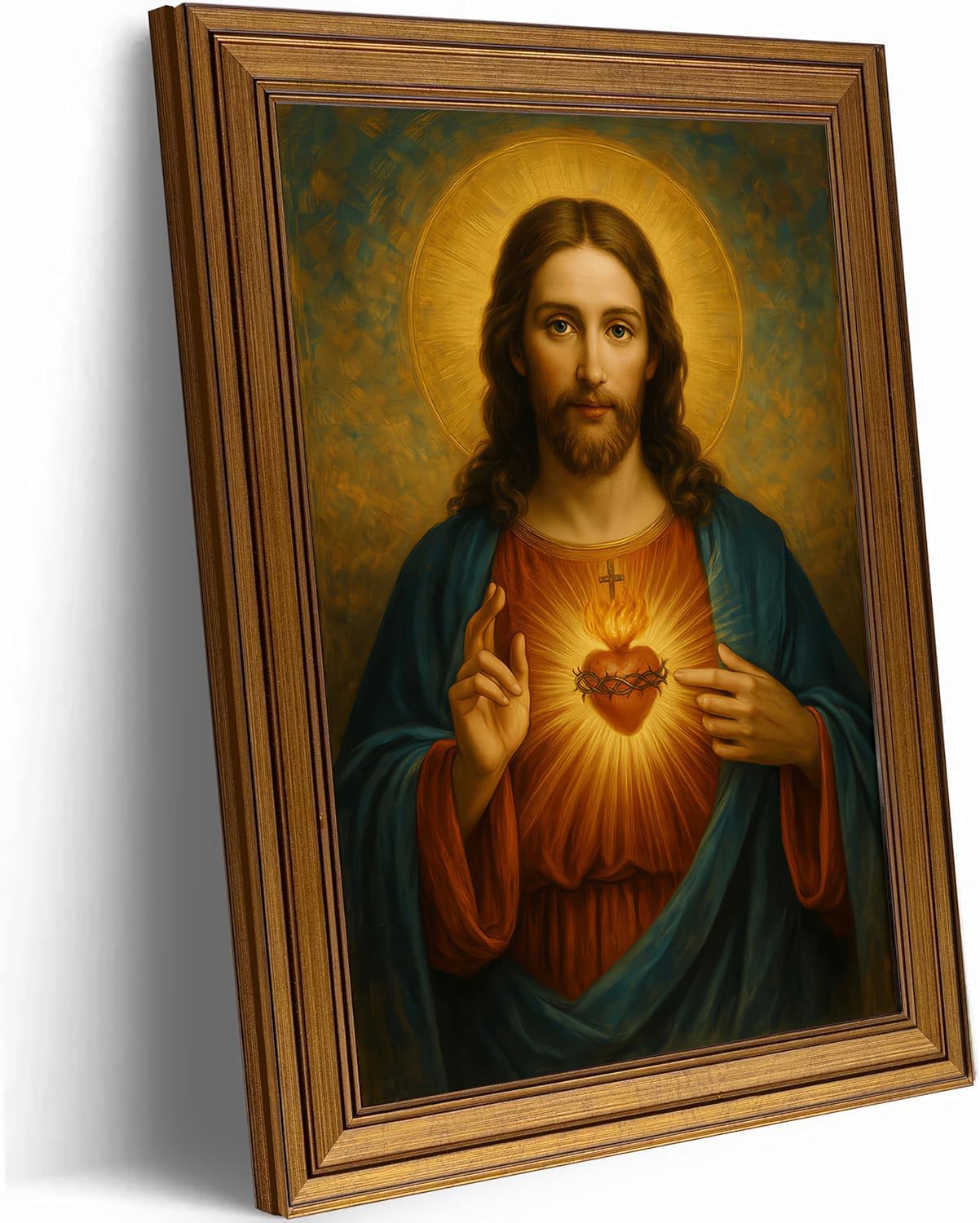
If the painting is in a family space where children play, I have found it helpful to explain, in simple terms, why we treat it gently: not because the object itself is magical or untouchable, but because of Who it represents. This can lead to natural conversations about reverence in church as well—kneeling, genuflecting, and handling sacred objects with care.
In our home, when we moved furniture or repainted walls, we always made sure to give special attention to finding a new, fitting place for the Face of Jesus painting. Those moves became small moments of reflection: “Where do we want the Lord’s face to be in this new season of our life?” It is a simple question, but it can open deeper reflection on how we are living our faith as a family.