
Historically accurate Jesus painting
Many of us grew up with images of Jesus that felt familiar, even if they did not always match what historians and Scripture scholars tell us about first‑century Jewish life. A historically accurate Jesus painting does not replace faith, but it can quietly deepen our sense that the Lord truly stepped into our world, in a real time and a real place.
When I first brought a historically accurate Jesus painting into my home, I remember feeling a gentle surprise. The face looking back at me did not match the lighter, European features I had seen all my life in church art. Instead, it showed a Middle Eastern Jewish man, with darker skin and features that fit the land where He actually walked. It did not change what I believed, but it helped me picture the Gospels with a little more honesty and concreteness.
This kind of image can sit quietly in a living room, prayer corner, or bedroom, and simply remind us that the Lord shared the same kind of dust, heat, and daily struggles that ordinary people in first‑century Galilee carried. It is not magic and it does not do the praying for us. It is just a respectful, thoughtful aid that can help us enter prayer with more attention and gratitude.

Why a historically accurate Jesus painting matters in daily life
For many American Catholics, images of Jesus were simply part of the background growing up: a framed print in the hallway, a picture in the parish vestibule, a small card tucked into a Bible. A historically accurate Jesus painting continues that same tradition of visual devotion, but with a different emphasis. It tries, as best as current research allows, to respect what we know about Jewish men in the region of Galilee during the time of the Roman Empire.
Historians and archaeologists remind us that Jesus was a real man in a particular culture and period. If you have never read about it, it can be interesting to explore how scholars think the face of Jesus might have looked in light of historical Jesus studies. A painting that pays attention to these details can be a small way of honoring that reality every time we pass by it.
In my own home, the historically accurate Jesus painting hangs near the front door. I see it as I leave for work and again when I return exhausted at the end of the day. The expression is calm but not unreal; the face looks like someone who has known hard labor, dust, and crowded streets. Over time, this has quietly reminded me that the Lord understands ordinary human tiredness and responsibility more than I usually remember.
The value of this kind of image is not in its style or trendiness but in the way it can gently nudge our imagination toward the truth that God became man in a specific, concrete way. It anchors prayer in the physical world: the color of skin, the texture of hair, the kind of clothing that would have brushed against the shoulders of people in Nazareth and Capernaum. It is a simple way of saying that our faith is not an idea floating above history, but a story that truly happened.
Placing a historically accurate Jesus painting in your home
One of the practical questions many Catholics ask is where to place a historically accurate Jesus painting. There is no strict rule. The right place is usually wherever you already find yourself pausing, thinking, or praying. Some people choose the living room, where the painting can quietly accompany family life without drawing excessive attention. Others prefer a personal corner dedicated to prayer, with a small table, a Bible, and perhaps a candle.
In my case, our family has a simple prayer corner off the dining room. The historically accurate Jesus painting hangs just above a small shelf that holds a crucifix and a rosary. It is not elaborate. Often, the area is a bit cluttered with school books or a half‑folded blanket. But in the middle of that everyday mess, the face in the painting stands steady, like a reminder that the Lord is willing to share even our unpolished moments.
Some people like to keep this kind of image in a bedroom, where it can be the last thing they see before going to sleep and the first thing they notice in the morning. Others place it in a hallway, so that the image stands between the public and private parts of the home, almost like a quiet witness at the border between the two. Whatever you choose, it can help to be intentional: maybe pause for a short prayer as you hang it, asking that it simply keep you mindful of Christ throughout the day.
How a historically accurate Jesus painting can support prayer
A painting, even a very thoughtful and well‑researched one, does not pray for us. It does not replace the sacraments, Scripture, or the life of the Church. But images have always been part of Christian prayer, especially for those of us who find it easier to focus when our eyes have somewhere steady to rest.
When I sit down with my Bible after work, I sometimes let my gaze rest on the historically accurate Jesus painting for a moment before I start reading. I do not expect anything special to happen. I simply remind myself that the hands that broke the bread at the Last Supper were real hands, attached to a Jewish carpenter from a small town, and that the eyes that looked with compassion on the crowds were human eyes. This gentle awareness often helps me read the Gospels a little more slowly, as if I were walking alongside a real person instead of skimming through a story I already know.
Some Catholics like to match their prayer to the expression in the painting. If the face is calm and steady, they may bring their worries there, letting the image remind them that Christ knows about illness, family strain, and financial anxiety. If the expression is more intense, they might use it for intercessory prayer, asking the Lord to be very present in a difficult situation. There is no particular formula. The point is simply to let the image support, not control, the conversation with God.
A historically accurate Jesus painting can also be helpful for children or teenagers. Young people often notice details that adults overlook. They may ask why Jesus looks different from the pictures in older holy cards, or why His hair and skin show a different background. These questions can open gentle conversations about where Jesus lived, what kind of culture He was born into, and how our faith is rooted in the real story of the people of Israel.
Different visual styles of historically accurate Jesus paintings
Not all historically accurate Jesus paintings look the same. Artists interpret the same research in different ways, and each home has its own taste. Some images lean toward a very realistic style, almost like a photograph. Others are more painterly, with soft colors and textured brush strokes. Some focus closely on the face, while others show more of the clothing and background.
The paintings often share a few common features: darker, olive‑toned skin; hair and beard styles that match what we know of first‑century Jewish men; and clothing that reflects the simple garments of that time, rather than modern or medieval robes. Within that framework, the details can vary quite a bit, so it can be helpful to look at more than one image and notice what feels respectful and prayerful to you.
 I want to reflect
Some paintings focus closely on the face of Jesus, almost like a portrait you might see in a family home. These can be especially helpful if you like to pray by slowly looking into the eyes of Christ, letting your own thoughts and worries surface as you do.
 See this style
Other images highlight the earth tones of the Holy Land: browns, reds, and muted golds. These paintings can blend naturally into a home decorated with simple, neutral colors, making the sacred art feel like a quiet part of the room rather than a separate, “churchy” corner.
 Imagine this at home
Some historically accurate Jesus paintings include background hints of Galilean landscapes, stone buildings, or simple household items from that time. These details can help you picture scenes from the Gospels more vividly when you pray.
 This could fit me
Many Catholics look for an expression that feels approachable: neither too harsh nor overly sentimental. These paintings try to capture a sense of steady compassion, as if Jesus were listening more than speaking, ready to receive whatever you bring to Him in prayer.
Frames, sizes, and where they tend to work best
Once you have found a historically accurate Jesus painting that speaks to you, the next question is often very practical: what size and frame will fit in your space? Some prints arrive already framed, while others are simple canvases or paper prints that can be placed in a frame you choose yourself.
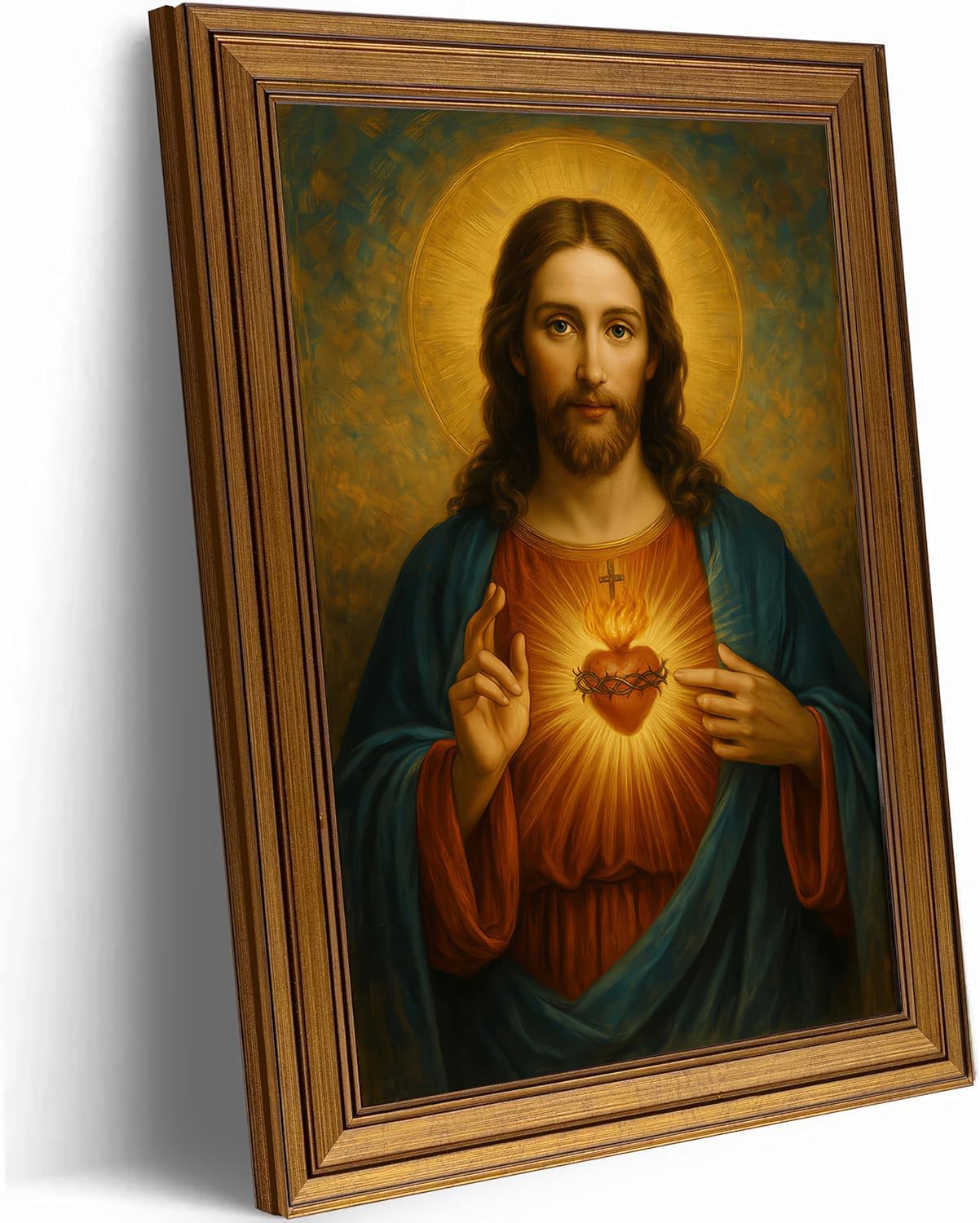 Picture this size
A larger painting can work well above a sofa, over a mantle, or on a main wall of a room. In such a place, the image naturally becomes a quiet focal point for family gatherings, conversations, and evenings spent together.
 Maybe this would fit
Smaller prints can be better suited for bedrooms, prayer corners, or above a small desk. These sizes feel more personal, as if the image is meant just for the people who share that space every day.
In our home, the historically accurate Jesus painting we chose is medium‑sized and framed in simple dark wood. It does not shine or draw attention like a piece of modern art. Instead, it sits quietly above the shelf with our Bibles and a small bowl for prayer intentions. Over time, its very ordinariness has become comforting. It feels like part of the family rhythm: present at breakfast, still there when we return late in the evening.
Respecting tradition while welcoming historical insight
Some Catholics feel a bit uneasy the first time they see a historically accurate Jesus painting that looks quite different from the images they grew up with. That reaction is understandable. Sacred art is often tied to childhood memories, parish devotions, and older relatives who passed on the faith. A new style of image can feel almost like a change in tradition.
It can help to remember that Christian art has always changed over time. Early Christians in the Roman Empire depicted Jesus differently from the artists of the Middle Ages, and those images looked different again from the ones created during the Renaissance or in more recent centuries. Each period tried, in its own way, to show something true about Christ: His gentleness, His kingship, His suffering, His closeness to the poor.
A historically accurate Jesus painting is simply one more step in that long story. Instead of focusing on royal robes or European features, it tries to honor the Jewish roots of the faith and the real, physical setting of the Gospels. Keeping such an image in our homes does not mean we reject older art. Many Catholics happily live with both: a more traditional Sacred Heart image in one room, and a historically grounded painting of Jesus in another.
In my own life, that balance has felt important. I still keep a small, older picture of Jesus that my grandmother gave me, even though it shows features that historians would probably question. Next to it, in another room, hangs the historically accurate Jesus painting that better reflects what we know today. Both images, in their own ways, have become part of how I remember that Christ is present in the ordinary days of my life.
Caring for your painting over time
Because a historically accurate Jesus painting is meant to stay with you for years, a little basic care can go a long way. Most canvas prints and framed images do best when they are kept out of direct, harsh sunlight for long periods. This helps the colors remain steady and the image stay clear. Gentle dusting with a soft cloth is usually enough to keep it clean.
Some Catholics like to mark the place where the painting hangs with small, simple gestures: maybe a candle lit during evening prayer, or a few fresh flowers on Sundays. These small actions do not add any special power to the image, but they can signal to our hearts that this corner of the home is meant for paying attention to God.
Over time, you may notice that the historically accurate Jesus painting becomes part of your daily habits in ways you did not expect. You might catch yourself glancing at it before leaving for an important appointment, or during a hard phone call, or when you feel especially grateful. The painting does not create these moments, but it can gently hold them, almost like a wordless companion who simply stays present.
Additional variations of historically accurate Jesus paintings
As interest in historically accurate images of Jesus has grown, more artists and studios have created their own interpretations. Some highlight the strength and determination of Christ’s face, while others lean into a softer, more contemplative expression. There are versions meant for modern décor and others framed in more classic, traditional styles.
If you are already living with one historically accurate Jesus painting, you might eventually notice another style that speaks to you in a different way. Some families keep one image in a shared living space and another in a private place of prayer or study. Each painting can invite a slightly different tone of prayer: one for intercession, another for gratitude, another for quiet listening.
 I’d like to compare
Some portraits emphasize a thoughtful, inward gaze, as if Jesus were silently praying. These can be especially helpful if you use silent, wordless prayer as part of your daily routine, letting the image keep you company while you sit in stillness before God.
This feels right to me
Other images seek a balance: they show a face that could belong on the dusty roads of first‑century Galilee, but with an expression that feels ready to listen and accompany. Many Catholics find this kind of portrayal especially reassuring in the ups and downs of ordinary family life.
Frequently asked questions about historically accurate Jesus paintings
1. What does “historically accurate” really mean in a Jesus painting?
In this context, “historically accurate” usually means that the artist has tried to respect what we know about the appearance, clothing, and environment of first‑century Jewish men in the region where Jesus lived. This involves attention to skin tone, facial features, hairstyle, and garments that would have been common in that time and place. It does not mean the painting is an exact photograph of Jesus, but that it takes history and culture seriously instead of simply repeating older European images.
2. Is it disrespectful to prefer a more traditional image of Jesus?
No. Many Catholics have deep affection for the images they grew up with, and those pictures are often connected to important memories of family and parish life. A historically accurate Jesus painting is not meant to condemn or replace older styles of art. It is simply another way of trying to honor the reality of the Incarnation. Some people find that they can live with both kinds of images, letting each speak to their hearts in a different way.
3. How can I use a historically accurate Jesus painting in personal prayer?
One simple way is to sit or kneel where you can see the image and begin your prayer with a quiet gaze. You might let your thoughts settle on the humanity of Christ: His work, His friendships, His tiredness, His joy. You do not have to say many words. You can simply sit in silence, aware that the Lord knows our daily struggles from the inside. Some people like to read a short passage from the Gospels and then look at the painting, imagining that scene as if it were happening in the world shown by the image.
4. Where is the best place in the house to hang this kind of painting?
There is no single “best” place. Many Catholics choose a room where the family naturally gathers, such as the living room or dining area, so that the image quietly accompanies daily life. Others prefer a more private location, such as a bedroom or a small prayer corner, where they can sit in silence without distraction. Some people even place their historically accurate Jesus painting near the front door, as a reminder of Christ’s presence when leaving and returning home.
5. Does owning a historically accurate Jesus painting change my faith in any way?
A painting, on its own, does not change faith. What it can do is gently shape how we imagine the Gospels. Seeing Jesus portrayed with features closer to those of a first‑century Jewish man may deepen your sense that He truly lived and walked among real people, with all the limits and conditions of that time. For some believers, this makes prayer feel more concrete and grounded. For others, it simply becomes a quiet visual reminder of the Lord’s closeness in the ordinary details of daily life.