
Jesus dinner painting
Jesus Dinner Painting
A Jesus dinner painting has a quiet way of shaping the atmosphere of a room. It does not speak out loud, yet it keeps a gentle reminder in front of our eyes: the Lord sitting at table, sharing bread, listening, and giving Himself in love. Many of us grew up with such an image in the dining room or kitchen, and it slowly became part of how we understood family, prayer, and everyday life.
Living with a Jesus dinner painting in daily life
When I think of a Jesus dinner painting, I remember the framed picture that hung above my grandmother’s table. It was simple and a bit faded, showing Jesus at table with His friends. We did not talk much about it, but it was always there when we sat down to eat, to argue, to celebrate birthdays, or to pray a quick blessing before a meal. That quiet image slowly shaped how I understood what meals were for.
A painting like this is not just decoration. It becomes part of the rhythm of the home. You see it when you set the table, when you pour coffee before work, when you clear the dishes late at night. It reminds you that Jesus is not far away from ordinary things like bread, laughter, dishes, and even the tired silence at the end of a long day.
Many American Catholic families place a Jesus dinner painting in the dining room or kitchen. Some choose an image of Jesus breaking bread with the disciples, others prefer a more classic Last Supper painting style. No matter the style, the intention is usually the same: to keep the Lord in view right in the middle of daily life, where we eat, talk, and sometimes struggle together.
Over the years, my own Jesus dinner painting has become a kind of silent companion. I pass it many times a day. Some days I hardly notice it. Other days one glance is enough to make me pause and whisper a short prayer in my heart for my family, for friends, or for someone who has asked for prayers. It is often just a few words, but the image helps me remember.

This page contains affiliate links. If you click and buy, I may earn a commission at no extra cost to you.
A Jesus dinner painting can be very detailed or very simple. Some show rich colors and many figures; others focus mainly on Jesus at the center, blessing the bread or reaching out toward those at the table. When choosing one, many people quietly look for an image that makes them feel calm, reverent, and gently drawn toward prayer.
It can help to pause in front of the image before deciding where to place it. Ask yourself: “Can I imagine saying grace here, with this painting nearby? Does this feel like something I could live with for many years?” Sacred art grows with us over time, so it is good to choose with patience.
What a Jesus dinner painting can mean in a Catholic home
For many Catholics, a meal is more than just food. It is a place of welcome, listening, and sometimes reconciliation. A Jesus dinner painting gently reminds us of that. When we see Jesus seated at table, we remember that He shared meals with the poor, with friends, with those who were confused or struggling. He did not stay distant from human life. He stepped right into it.
In an American home where life is often busy and schedules are full, a sacred image above the table can be one of the few stable things that do not move or change. Kids grow up, furniture shifts, paint colors come and go, but that image of Jesus at table can quietly stay in its place, watching over every season.
My own experience with a Jesus dinner painting has been simple. There are times when I sit at the table with a cup of coffee, feeling scattered or worried, and my eyes wander toward the painting almost by habit. I do not always form a clear prayer, but I often find myself saying, “You know, Lord,” and leaving it there. The image makes that short, clumsy prayer feel honest and enough.
Some families like to include the Jesus dinner painting in little traditions, such as:
- Lighting a candle near the painting during Sunday dinner.
- Saying a short blessing for the home while standing near the image on New Year’s Day or Epiphany.
- Placing fresh flowers under the painting during Easter or special anniversaries.
- Inviting children to draw their own version of the scene and place their pictures near it.
None of this has to be complicated. The strength of a Jesus dinner painting is its quietness. It simply looks back at you as you live your life. It is there when the meal is joyful and there when the chairs are pushed back because of a difficult conversation. In all of that, the image gently points to the presence of Christ in the middle of our real, imperfect homes.
Placing a Jesus dinner painting at home
Deciding where to place a Jesus dinner painting can be a small act of faith. It is like saying, “Lord, I want You to be close to this part of my life.” Most people choose one of a few common locations:
- Above the dining table, centered so that everyone can see it.
- On a side wall in the kitchen, where it is visible while cooking and serving.
- In a breakfast nook or small eating corner where the family often gathers.
- In a family room if that is where meals and conversations often happen.
It can be helpful to look at the wall from different seats at the table. Try to imagine what each person will see. Will the painting be easy to notice without dominating the room? Does it feel like it belongs there, like it fits naturally with the furniture and colors?
I once moved my Jesus dinner painting from a hallway into the dining area. In the hallway, I passed it often but did not really stop. Once it was above the table, something changed. When we prayed before meals, my eyes naturally went to the painting. Even guests sometimes glanced at it, and a few quietly commented that they liked having Jesus “at the table.” It became part of how we gathered.
Practical details also matter:
- Try to hang the painting so the center is at about eye level when standing.
- Avoid strong direct sunlight that could fade colors over time.
- Keep a little space around the painting so it feels like a focal point, not squeezed in.
- Use a stable hook or anchor, since dining room walls often vibrate slightly when chairs move.
None of this needs perfection. A slightly off-center frame will not disturb the Lord. What matters more is the intention in your heart as you set this image in place, asking quietly that your table and your home may be a place where love and faith can grow, even in small, ordinary ways.
Different styles of Jesus dinner painting
There is no single way to portray Jesus at dinner. Artists across centuries have imagined Him at table in many different ways. Some paintings are very realistic, almost like a photograph; others are softer, more symbolic, or gently stylized. When choosing a Jesus dinner painting, it can help to notice what style naturally draws you into prayer.
Some common styles you might see include:
- Traditional Last Supper scenes – Jesus at a long table with the twelve apostles, often in rich colors and detailed clothing.
- Simple, modern lines – fewer details, calmer colors, focusing more on Jesus at the center and the gesture of breaking bread.
- Warm, home-like settings – images that look a bit like a family meal, helping us sense Jesus’ closeness to our own tables.
- Soft, devotional art – gentle faces, glows of light, and scenes meant to invite a peaceful spirit into the room.
The Jesus dinner painting I live with now is more on the traditional side, with Jesus in the center and the disciples leaning in from both sides. The colors are warm, and there is a calm expression on His face. I find that when I am tired, just looking at His hands extended over the bread helps me remember that my day, with all its struggles, can be offered quietly to Him.

Another person might feel more at peace with a softer, understated painting. That is perfectly fine. Sacred art is personal. What matters is whether the image helps you turn your heart toward God when you see it. If it does, then it is serving its purpose in your home.
Some families even keep more than one Jesus dinner painting over time. They might start with a small, inexpensive print and later choose a larger framed piece as their home and life grow. The important thing is not the price or size, but the way the painting quietly supports prayer and love at the table.
Gently including children and guests
A Jesus dinner painting can open simple conversations with children and visitors. These conversations do not have to be deep or heavy. They can be as simple as a child asking, “Who are the people in that picture?” or a guest saying, “I like that painting; it feels peaceful.”
With children, small questions can help:
- “Where do you think Jesus is sitting in this painting?”
- “What do you think they are talking about at that table?”
- “If you were in that picture, where would you sit?”
These questions are not lessons or tests. They are invitations to imagine being close to Jesus at the table. Over time, children often form their own quiet bond with the painting. I remember one of my younger relatives who used to say goodnight to the Jesus dinner painting as she walked past the dining room on the way to bed. No one told her to do that; it was simply her way of responding to the image.

With guests, the presence of a Jesus dinner painting quietly expresses that faith is part of the home. It is there whether the guest is Catholic, another Christian, or not religious at all. You do not have to explain it or make it a topic unless the other person brings it up. Often, guests simply notice that the home has a certain warmth and sense of meaning around the table, without anyone saying much.
In my own experience, the most meaningful conversations around the painting have been very simple. Sometimes a friend going through a hard time has sat at the table, looked at the image, and then said something like, “I hope God is really that close.” Those moments remind me that a painting can be a gentle doorway toward deeper trust, without any pressure or long speeches.
Using a Jesus dinner painting in prayer
A Jesus dinner painting can quietly support personal and family prayer without turning your dining room into a formal chapel. Prayer around the table is already familiar to many Catholics, especially grace before and after meals. The painting simply offers a face and a scene to hold in mind while the words are spoken.
Here are a few calm, ordinary ways people sometimes pray with a Jesus dinner painting:
- Taking a moment alone at the table, looking at the painting, and telling the Lord in your own words how the day went.
- Pausing before a family celebration (like a birthday dinner) to thank God quietly while facing the image.
- Sitting with a cup of tea in the evening, looking at the painting, and bringing to mind people who need prayer.
- During Lent or Holy Week, spending a few extra minutes in front of the painting, reflecting on Jesus giving Himself in love.
I have found that my Jesus dinner painting helps me when I feel spiritually dry. On days when I do not have many words for God, I sometimes just sit at the table and look at the image for a minute or two. I might quietly say, “Stay with us, Lord,” and then carry on with my tasks. The prayer is small, but the image helps me make it real.

Sacred images are never magic, and they do not replace the sacraments or the life of the Church. They are simply tools that help us remember and turn our hearts toward God in the middle of everyday life. A Jesus dinner painting does this in a very specific way: it keeps before our eyes the Lord who chooses to be with us at the table, in the ordinary and the familiar.
Personal reflections on living with a Jesus dinner painting
Over the years, my relationship with my Jesus dinner painting has quietly changed. At first, I hung it mostly because it felt “right” to have something religious in the dining room, the way my parents and grandparents had. I did not think very deeply about it.
Later, during a particularly difficult season of life, I remember sitting at that table late at night, too tired even to say much of a prayer. I looked up at the painting and noticed, maybe for the first time in a while, the way Jesus’ hands were extended. One hand reached toward the bread, the other seemed to be reaching out as if to bless or welcome. For some reason, that small detail brought a kind of quiet steadiness to my heart. I felt reminded that I was not alone at that table, even in the silence.

I have also seen how guests respond to the painting. Some do not mention it at all, but their eyes rest on it for a second while they settle into their chairs. Others say things like, “My grandparents had one just like that,” and suddenly we are talking about their memories of Sunday dinners, rosaries, or holidays long past. The painting seems to open a small doorway into stories and shared experiences of faith and family.
For me, that is one of the quiet gifts of a Jesus dinner painting: it anchors a space in tradition without forcing anything. It stands there, steady and patient, through every season. The paint does not change, but we do, and somehow the image stays meaningful as we grow older, pass through joys and losses, and learn, slowly, what it means to let Christ be part of our ordinary days.
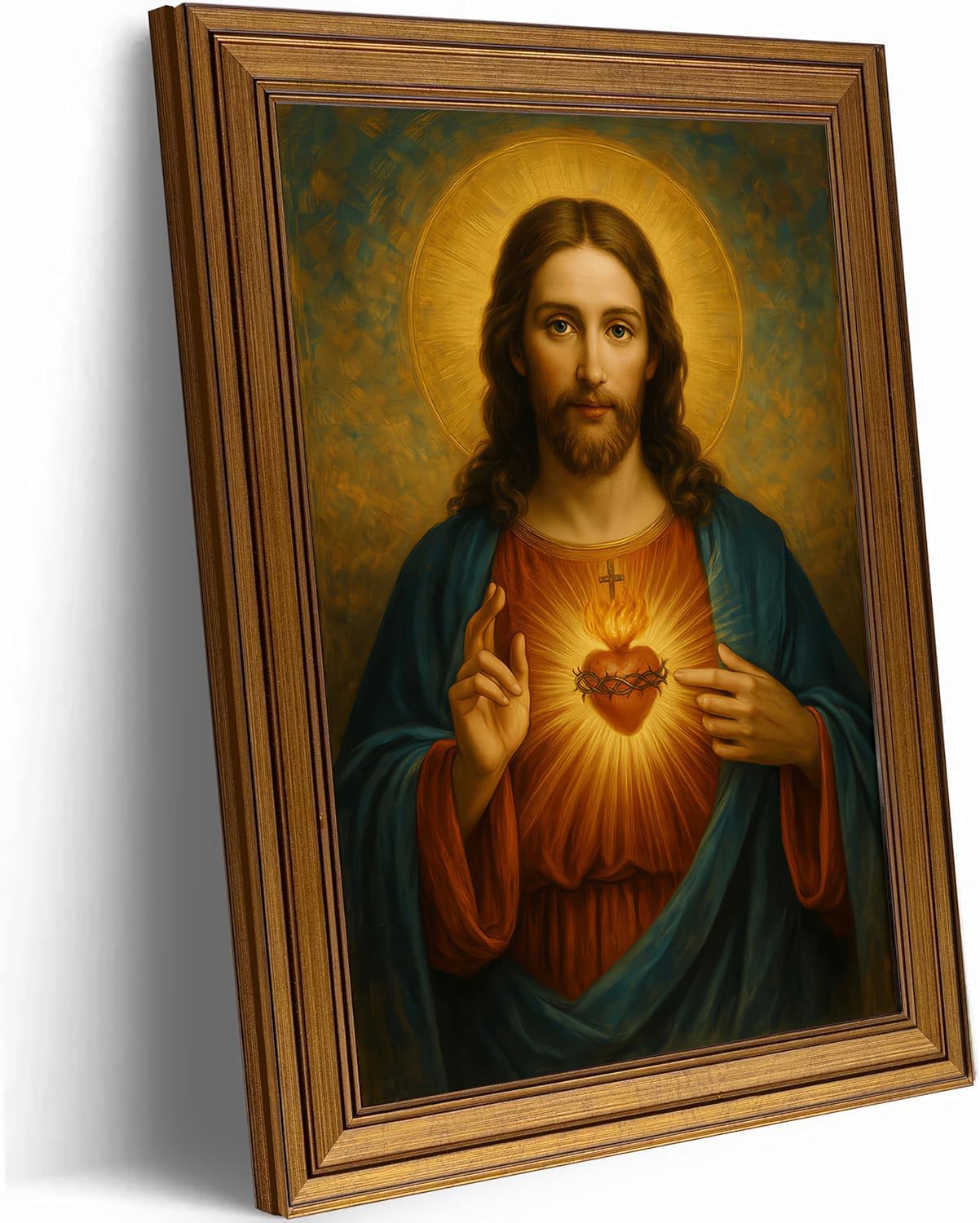
Simple care for a long‑lasting image
Once a Jesus dinner painting finds its place in the home, it usually stays there for many years. A little basic care can help it remain clear and beautiful without much effort:
- Dust the frame gently with a soft, dry cloth from time to time.
- Avoid household sprays or harsh cleaners directly on the painting or frame.
- If the painting is near the kitchen, keep it far enough from the stove to avoid excess steam or grease.
- Check every so often that the hook and wire are still secure.

Because a Jesus dinner painting often becomes part of family memories, many people are glad to see it last. I know someone who brought their parents’ old Jesus dinner painting into their own home after the parents moved to a smaller place. The frame was a little worn, but they carefully cleaned it and found a new spot over their own table. In that way, the image carried not only the memory of Christ’s presence, but also the story of a family’s faith over generations.
