
Jesus glass painting
A Jesus glass painting is a quiet, steady reminder that the Lord is present in the middle of ordinary life. Behind the glass, the image is protected, yet always visible when we walk past, prepare a meal, pause before going to work, or end the day in silence. Many Catholics like to keep one near a prayer corner, a bedside table, or by the front door, not to impress anyone, but simply to turn the heart back to Christ in the middle of a normal, sometimes tiring day.

When I first brought a Jesus glass painting into our home, I did not think of it as decorating. I was coming back from a difficult season, and I just wanted one clear place in the house where my eyes could rest on the Lord. The glass frame made it feel a bit more protected and lasting, something I could wipe clean while tidying the room, keeping the image clear and bright.
Over time, I noticed how often I would pause in front of it for a brief moment, maybe only a few seconds, to say a simple prayer: “Lord, stay with us,” or “Jesus, I trust You, even if I don’t understand.” Nothing dramatic, just tiny touches of the heart through the day. That is often how a Jesus glass painting quietly works its way into daily Catholic life: not as a centerpiece of attention, but as a faithful background reminder of God's nearness.
The tradition of sacred images in Christian homes goes back a long way. You can see echoes of this in the history of Christian art and in the way believers have always tried to keep Christ at the center of home life, through icons, statues, or simple framed art. A glass-framed picture is one more way of doing the same, adapted to modern houses and apartments, where space might be limited and surfaces are easy to dust and clean.
What a Jesus glass painting can mean in everyday life
For many Catholics in the United States, faith is lived between work shifts, school runs, bills, and medical appointments. A Jesus glass painting does not remove any of that. It just sits where it is placed: by the kitchen table, down the hallway, above a small bookshelf, or near a place where someone prays the Rosary most nights. Its meaning comes from what quietly happens in the heart over time.
I remember one evening when our family had argued over something small that did not feel small at the time. After everyone went to their rooms, I passed by the painting. I felt tired and a little ashamed of my own harsh words. I just looked at the face of Christ behind the glass. There were no special words, only a simple, “Lord, have mercy on us.” In that moment, the painting was not “art” for me. It was more like a doorway to a short, honest conversation with God.
This is how many people naturally use sacred images: as gentle invitations to prayer, not as decorations to be admired. The glass makes the picture feel set apart, almost like a small window in the house that opens toward something beyond the everyday noise. It can be especially helpful for those who find it hard to focus, giving the eyes something still and meaningful to rest on while the heart speaks to God as it can.
Historically, Christians have surrounded their homes with images of Christ, Mary, and the saints, not because the images have power in themselves, but because they help the mind remember what is most important. Even a simple Christian art piece in glass can be a small way to weave prayer into the rooms where we live, cook, and rest.
Placing a Jesus glass painting at home
There is no strict rule about where to place a Jesus glass painting. Some families like to create a designated prayer corner with a crucifix, a candle, a Bible, perhaps a small statue or two, and a framed image of Christ. Others, especially in smaller apartments, might have only one good spot: a wall near the dining table, a bedroom dresser, or a small shelf by the entrance.
What matters most is that the place feels respectful and natural. The image should not be hidden away like a secret, but it also does not need to be pushed in front of every visitor. A quiet corner that you pass several times a day is often enough. Over time, spouses, children, and even guests may gravitate to that space for a few seconds of silence.
In my own home, we eventually moved our Jesus glass painting to a simple wooden shelf where we also keep our worn rosary beads and a small bowl with prayer intentions written on folded pieces of paper. It is not fancy. The shelf came from an old piece of furniture. But the presence of the painting above it gently gathers everything together: family worries, joys, and the small offerings of each day.

Light, reflection, and quiet focus
One particular aspect of a glass-framed image is the way it catches light. Morning sunlight, a small table lamp in the evening, or even the glow from a hallway can play across the glass. Sometimes this gentle reflection can draw the eye, making you notice the painting in moments when you were not intentionally looking for it.
This can be especially meaningful during late nights when someone in the family is restless or worried. I remember walking through the house once, unable to sleep because of a family concern. The only light on was from a nearby lamp, and it reflected softly off the Jesus glass painting. That slight shimmer caught my attention and I stopped, whispered a simple, “Lord, you see this,” and then went back to bed a little more at peace.
For parents, this kind of quiet presence can also be reassuring for children. Kids often notice details adults overlook: how the light hits the picture, the colors in the image, or the gentle expression on Christ’s face. A Jesus glass painting placed at a height where children can see it easily can become part of their nightly routine—perhaps a quick sign of the cross before bed or a simple “Goodnight, Jesus,” said without pressure or formality.
Durability and reverence in daily use
Glass framing also has very practical advantages. Life at home is not always tidy: dust, cooking steam, children’s fingerprints, or the occasional bumped wall are all part of reality. A Jesus glass painting can be wiped gently with a soft cloth, keeping the image clear and dignified. The frame and glass protect the picture inside, allowing it to remain a stable presence even as furniture and decorations come and go.
Taking a few minutes now and then to clean the glass can even become a small act of reverence. I have found that when I slowly wipe the surface, I tend to pray almost without thinking: “Lord, keep my heart clean too,” or “Help us see You more clearly.” It is a quiet, almost hidden way of turning a household chore into a moment of prayer.
For those who move frequently—from rental to rental, or from dorm to shared housing—a framed Jesus image under glass can be comforting. It is something that comes with you, no matter how bare or unfamiliar the new room may be at first. Setting it up is often one of the earliest steps to making a temporary space feel like home.


Praying with a Jesus glass painting
Praying in front of a Jesus glass painting does not require any special method. Many people simply sit or stand before it, perhaps light a candle nearby, and rest in silence for a moment. Others might read a short passage from Scripture, then lift their eyes to the image while the words settle in the heart.
Some simple ways Catholics often pray with such an image include:
- Beginning and ending the day with a short glance at the painting and a brief prayer.
- Placing personal intentions—names, situations, worries—spiritually before Christ while looking at the image.
- Praying the Rosary or the Divine Mercy Chaplet nearby, letting the image keep the mind centered.
- Offering a quiet thank you after returning from Mass, work, or a visit with someone in need.
In my own routine, I often pause at the painting after coming home from work. I do not stay long—sometimes only ten or fifteen seconds. I place the day there: the things that went well, the conversations I regret, the people I am worried about. Then I trace a small sign of the cross and step back into the flow of family life. It helps me remember that everything in the day ultimately belongs to God.
A Jesus glass painting as a quiet gift
A framed image of Christ under glass can also be a gentle gift, especially for someone who is going through a time of illness, grief, or transition. It does not need to be presented with many words. Often, less is better. A simple, “I thought this might help your prayer,” or “I wanted you to have something of the Lord’s presence in your room,” can be enough.
I once brought a Jesus glass painting to a relative who was recovering from surgery and staying indoors for weeks. We placed it on a small table within her line of sight from the bed. She told me later that she would often look at it when she could not sleep, just to remember that she was not alone. It did not make her pain disappear, but it did give her a sense of being looked upon with love.
Of course, not everyone will receive such a gift in the same way. Some may prefer a crucifix, a statue of Mary, or a simple cross. That is fine. What matters is the quiet intention behind the gesture: to bring the presence of Christ into a home or a room, in a way that respects the person’s pace and personality.

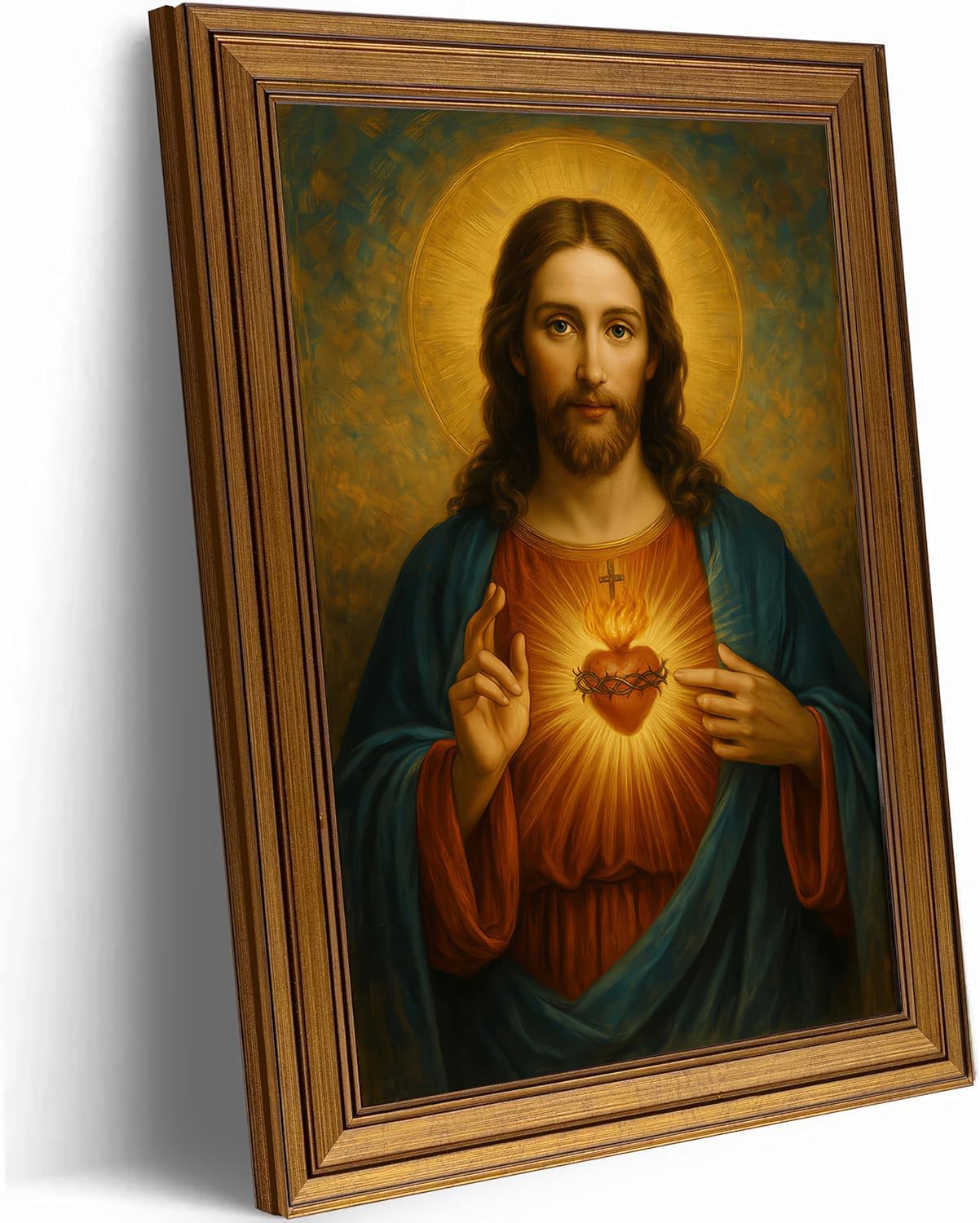
Living with sacred images over the years
One of the quiet gifts of a Jesus glass painting is the way it can stay with a family across the years. Children grow, furniture changes, houses are bought or sold, yet the same image of Christ can move from wall to wall, city to city. It becomes familiar, like an old friend in the background of family life.
I have seen this in my own extended family. One cousin has the same Jesus glass painting that hung in our grandparents’ hallway. It now hangs by the stairs in her home. Each time I visit, I feel a thread of continuity—memories of Sunday visits, shared meals, and quiet prayers at night. The glass is slightly worn at the edges, but the image is still clear, carrying decades of family stories.
This is one way sacred art helps us remember that our faith is not just a personal feeling but something handed down, lived together, and carried gently from one generation to the next. A simple picture under glass can become part of that ongoing story.
Jesus glass painting in small spaces
Many Catholics today live in apartments, shared housing, or dorm rooms where there is not much room for large religious displays. A Jesus glass painting can serve as a compact, respectful focus point even in such small spaces. It does not require a big wall or a special piece of furniture—sometimes a narrow strip of wall above a desk or near a window is enough.
In one phase of my life, I lived in a very small studio. I had room for only a small table, a bed, and a chair. The Jesus glass painting I had then was not large, but I placed it on the wall opposite my bed. Each morning when I opened my eyes, it was the first thing I saw. Each night before turning off the light, I looked up and quietly entrusted the day to the Lord. Even in that cramped space, the image made the room feel less like a temporary box and more like a place where God and I could meet.
For students or workers away from home, a framed image like this can be especially comforting. It reminds them that, even far from family and parish, they remain held in the same faith and under the same loving gaze of Christ.


Frequently asked questions about a Jesus glass painting
Yes, many Catholics place sacred images in ordinary rooms like bedrooms and kitchens. The Lord is present in all parts of life, not only in obviously “religious” spaces. As long as the image is treated with respect—kept clean, not placed in an inappropriate spot—it can be a beautiful reminder of God’s nearness in everyday tasks like cooking, getting ready for work, or winding down at night.
Families can keep things simple. You might gather in front of the painting for a short evening prayer: an Our Father, a Hail Mary, or a brief prayer of thanks for the day. Some families place a candle or a small bowl for prayer intentions nearby and let children add their own silent or spoken intentions. The image serves as a gentle focal point, helping everyone remember whom they are speaking to, without turning prayer time into a performance.
A soft, clean cloth is usually enough to wipe the glass. It can help to say a short prayer while you clean, turning the small task into an act of love. Avoid harsh chemicals that might damage the frame or seep into the picture. If the painting needs to be moved, handle it with care, carrying it with both hands and placing it gently in its new spot. Treating it with respect shows the reverence you hold for the One it represents.
Not everyone shares the same background or comfort level with religious images. If someone asks, you can simply say that it helps you pray or reminds you that Christ is present in your home. There is no need to argue or explain in detail. Often, people quietly appreciate seeing that faith matters to someone, even if they do not say so. If a guest is uncomfortable, you can be gentle and respectful, but you do not need to hide what is important to you.
Prayer sometimes feels dry for all of us. In those moments, a simple visual focus can be helpful. Looking at the face of Christ in a Jesus glass painting, even without many words, can be a way of staying present before God when feelings are weak or distracted. It does not solve everything or automatically make prayer easy, but it can support the choice to remain with the Lord, even in silence, trusting that He is at work in ways we may not see.