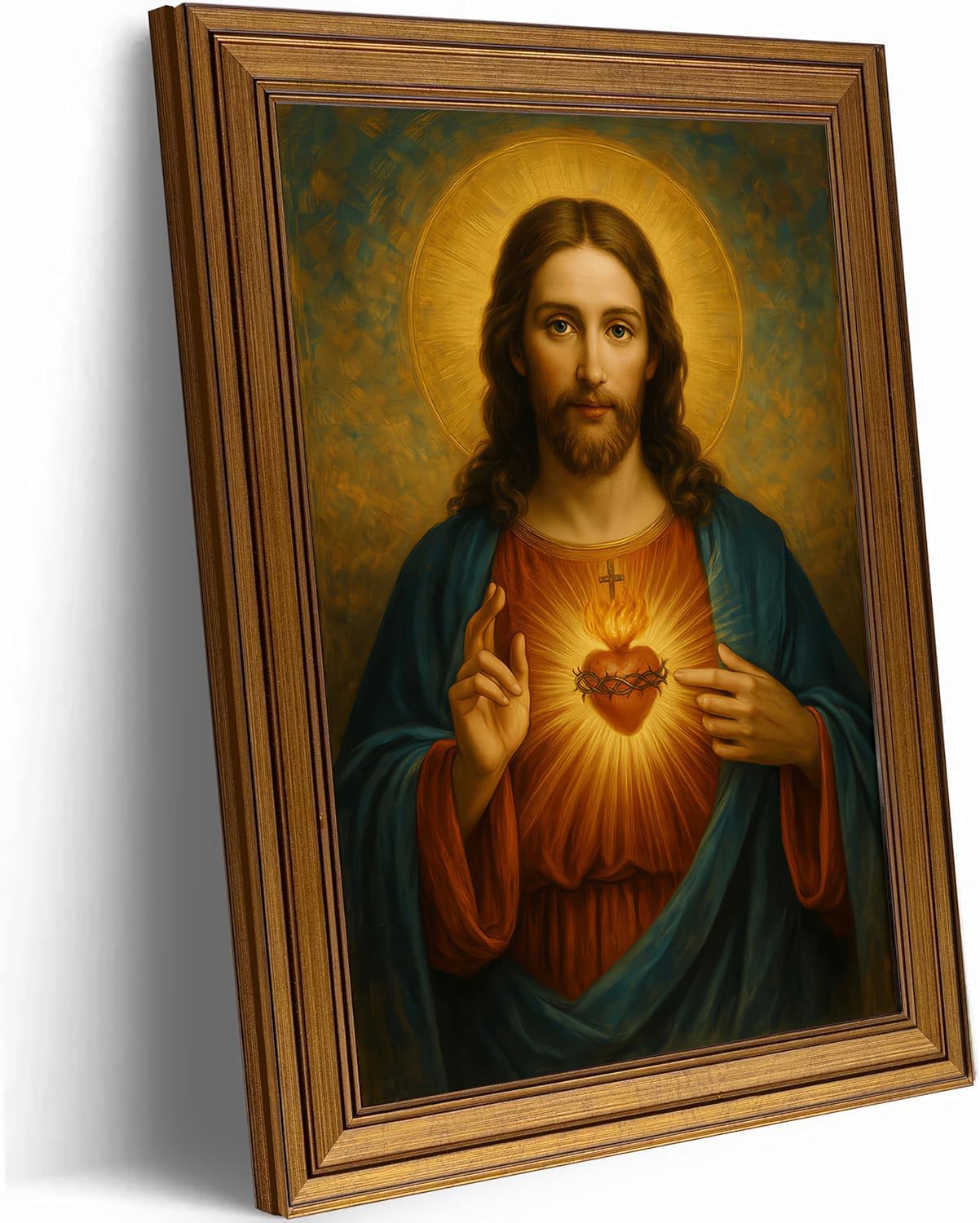
A Jesus hand painting is more than decoration. For many of us, it becomes a quiet companion in prayer, a steady reminder that the Lord is close even in the most ordinary corners of home and work. A simple image on the wall can gently pull the heart back toward trust, gratitude, and silence during a rushed day.
When we choose a painting that focuses on the hands of Jesus, we are invited to remember how those hands touched the sick, blessed children, broke bread, and were finally nailed to the Cross. In a busy American home, where phones buzz and schedules feel full, that kind of image can help create a space that feels set apart, even if it is only a small corner of a kitchen, office, or bedroom.
Over time, a Jesus hand painting can become part of the rhythm of daily life: the picture you look at before leaving for work, the place your eyes rest during evening prayer, or the image you notice in the background while folding laundry or washing dishes. It does not have to be dramatic or large to be meaningful. It just needs to be there, patiently waiting, as we slowly learn to lift our hearts to God throughout the day.
This page contains affiliate links. If you click and buy, I may earn a commission at no extra cost to you.
Living with a Jesus hand painting in daily life
When people speak about sacred art, they sometimes think of museums, grand basilicas, or formal chapels. Yet a simple Jesus hand painting in a hallway or next to a desk can quietly shape the atmosphere of a home. It does not demand anything. It simply offers a gentle reminder: the Lord is here, and His hands are still at work in our lives.
In my own home, the first Jesus hand painting I placed was in a small corner near the front door. It shows the hand of Christ extended in blessing. I did not choose it for any special reason at first; I just wanted something modest that would fit the space. Over time, though, I found myself touching the frame lightly before leaving the house, almost like a small, wordless prayer asking for protection for my family and those I would meet that day.
A painting like this can become a natural part of family routines. Children might learn to say a short prayer when they walk past it. Parents might pause in front of it at night after everyone is asleep, placing the day into God’s hands. Guests might notice it and feel that your home is a place where faith is quietly alive, without feeling pressured or uncomfortable.
In a world that moves quickly, these little pauses matter. A Jesus hand painting can help create them. It does not replace the sacraments or parish life, of course, but it can gently support them by keeping faith visible in the spaces where we actually live, work, and rest.
Different ways a Jesus hand painting can speak to the heart
There are many artistic styles that focus on the hands of Jesus. Some highlight His open palm, as if inviting us to come closer. Others show His hands raised in blessing, or gently resting on someone in need. A more contemplative image might focus on the wounded hands of the risen Lord, quietly reminding us of both suffering and hope.
Sacred art has always had a place in Christian tradition. For those who like to learn more, the history of Christian art shows how believers throughout the centuries used images to keep the mysteries of faith close to everyday life. A painting on a wall might seem small compared to the great works in cathedrals, but the intention is similar: to lift the mind and heart toward God.
When you look at a Jesus hand painting, you might notice your attention going to different things over time. One day you might focus on the tenderness of His touch, another day on the strength of His grip, and another on the wounds that speak of sacrifice and love. The same image can accompany you through many seasons of life, from joy to sorrow, from confidence to confusion.
Some people like bright, modern colors, while others prefer a more classic or muted style. There is room for both. What matters most is that the image helps you pray, even if the prayer is as simple as, “Lord, I trust You,” or “Lord, be with my family.” A humble painting can hold a great deal of unspoken prayer over the years.
Examples of Jesus hand painting styles for home and prayer
Below are some common ways a Jesus hand painting can appear in a home or prayer space. These are not categories you must follow, just gentle suggestions that might help you think about what would be most meaningful for you and your family.
Classic blessing style
Blessing hands in the living room
A painting that shows Jesus raising His hand in blessing often fits well in a family room or near the front door. It can quietly mark the house as a place under God’s care. Some people like to pause there before leaving or entering, especially on difficult days.
In my own experience, having a blessing-style Jesus hand painting near the entryway has helped me remember to say a quick prayer for the people who cross our threshold: relatives, neighbors, delivery drivers, and even strangers who might need a bit of unseen support.
Comfort and closeness
Hands reaching toward the weary
Some paintings picture Jesus’ hands reaching outward, as if offered to someone who is tired or burdened. These images can be especially meaningful in places where people are likely to feel stress: near a work desk, in a study area, or by the bed where someone rests after a long day.
Sitting quietly in front of a painting like this, even for a minute between tasks, can become a small refuge. There is no need for complicated prayers. Simply looking at the hands of Christ and breathing slowly can remind the heart that we are not alone in our struggles.
Wounded yet risen
The wounds that remain
Other paintings show the pierced hands of the risen Lord. These can be especially powerful in a prayer corner or near a favorite chair where you read Scripture. The wounds remind us that our faith is not abstract, but rooted in real suffering and real love.
For those who have lost someone, or who are walking through illness, a wounded Jesus hand painting can be a quiet companion in grief. It does not erase pain, but it can keep us from feeling that pain is meaningless or unseen.
Placing a Jesus hand painting in different rooms
In the living room or family space
A living room is often the heart of a home: where people gather, talk, disagree, laugh, and share meals. Placing a Jesus hand painting here can help ground these everyday moments in quiet faith. It does not need to be the center of attention. Often, a smaller painting hung near a bookshelf or side table feels more natural than a very dominant image.
Some families like to light a candle beneath the painting on Sundays, or on special days such as anniversaries, births, or times of mourning. Others may simply let it be there, a silent witness to the life of the home. Over time, that simple presence can be surprisingly steadying.
In the bedroom or personal prayer corner
A bedroom can be an especially good place for a Jesus hand painting, particularly for those who like to pray in the early morning or late at night. Seeing the hands of Christ before sleep and upon waking can help bookend the day in trust. A small painting over a dresser or near a bedside table works well and does not overwhelm the room.
I once placed a small Jesus hand painting near a window in my room, where the first light of the morning would fall onto it. On some mornings when prayer felt dry or distracted, just noticing that gentle glow on His hands was enough to draw me into a few honest words with the Lord before the day began.
A small Jesus hand painting also fits naturally into a dedicated prayer space, even if that “chapel” is just a shelf or a corner of a room with a chair, a Bible, and a candle. The image can be placed above a small table or next to a crucifix, fostering a sense that this corner is set apart for meeting God in a quiet, personal way.
Using a Jesus hand painting for family and personal prayer
Many Catholics find that praying in front of an image makes it easier to stay focused, especially during short, simple times of prayer. A Jesus hand painting can help both children and adults find a point of connection. Looking at His hands, you might remember the people you want to entrust to Him that day: your family, your parish, those who are sick, or those who are far from home.
In family prayer, children might be invited to name one person they want Jesus to “hold in His hands” that evening. This is a gentle way to help them learn to pray for others, without pressure or complicated explanations. The painting simply serves as a visual aid, making the invisible feel a little more tangible.
On a personal level, some people like to sit quietly and rest their own open hands on their knees while looking at the painting. This small gesture can be a sign of surrender or trust. It is not a magic formula, just a physical way of saying, “Lord, my life is in Your hands,” even when we do not have many words.
During difficult times—such as waiting for medical results, facing job changes, or carrying family worries—a Jesus hand painting can become a place where we “leave” our concerns, at least for a moment, trusting that God sees and cares. Again, no promises of instant peace or solutions, just a quiet invitation to lean on Him.
Personal experiences with a Jesus hand painting
Over the years, I have had several different images in my home, but one Jesus hand painting has stayed closest to my heart. It shows only the lower part of Christ’s arm and His open palm, as if He is offering to lift someone up. At first, I placed it in a hallway almost without thinking. But that hallway was where I would pass many times a day, often in a hurry.
During a particularly heavy season—when a family member was ill, and work felt uncertain—I found myself pausing more often in front of that painting. Sometimes I would just stand there for a moment, mentally placing the person I loved into those hands. Other times, I would mutter a short, clumsy prayer. There were no sudden signs, but I did feel less alone in what we were going through.
Another time, I noticed how our children had quietly formed their own habits around the same Jesus hand painting. One of them would touch the frame on the way out to school, almost like a ritual of asking for protection without putting it into words. Another liked to lean against the wall beneath the picture while tying her shoes, looking up at it with a kind of simple trust that I envied.
These small experiences are not dramatic stories. They are just examples of how a Jesus hand painting can weave itself into ordinary life: the rush of mornings, the fatigue of evenings, the worries we carry without telling anyone, and the little gestures of faith we make almost without realizing it.
Jesus hand painting as a quiet gift
Sometimes a Jesus hand painting is not only for our own home. It can be a meaningful gift for someone who is moving into a new apartment, starting married life, welcoming a new baby, or even walking through a time of grief. The key is to offer it gently, without pressure, and with sensitivity to where the person is on their own journey of faith.
When giving such an image, some people like to include a simple note, something like, “May this remind you that you are always held in the hands of the Lord.” There is no need for long explanations; the painting can speak quietly for itself over time.
I once gave a small Jesus hand painting to a friend who had just lost a close relative. There were no words that could really comfort her, but I hoped that the image might become a place where she could pour out her sorrow. Months later, she told me that she had placed the painting near a chair where she often sat in silence, and that it helped her at least feel that her pain was not unseen.
Gifts like this do not fix things, of course, but they can provide a gentle reminder of God’s presence and of the quiet support of the Church and of friends who pray, even when they do not know what to say.
Caring for a Jesus hand painting over time
Once a Jesus hand painting finds its place in your home, it helps to care for it with the same respect you would give to other meaningful objects. Dusting the frame gently from time to time and making sure the image is securely hung are small but important acts. They show that what the painting represents truly matters to you.
You might also notice that sunlight changes how the painting looks at different times of day. Some people appreciate how morning or evening light softens the colors. Others prefer to keep sacred images out of direct sunlight so they do not fade. There is no single correct way, only what helps you keep the painting as a steady, prayerful presence.
Over many years, a Jesus hand painting can become part of your family’s story: the image that appears in the background of old photos, the picture that children remember from their childhood home, the thing that moves from wall to wall as life circumstances change. Treating it with quiet care reflects the deeper reality it points to.
Frequently asked questions about Jesus hand painting
1. Is it appropriate to have a Jesus hand painting in any room of the house?
Yes, it is generally appropriate to place a Jesus hand painting in any room where you feel it will help you remember God’s presence. Many people choose common areas like the living room or hallway, while others prefer more private places like a bedroom or prayer corner. The main consideration is reverence: try to place the image where it will be treated with respect and where it can genuinely support prayer and reflection.
2. How can I pray in front of a Jesus hand painting if I do not know many formal prayers?
You do not need complicated words to pray in front of a Jesus hand painting. You can simply sit quietly and tell the Lord what is on your heart, as you would speak to a close friend. You might look at His hands and say something short, such as, “Jesus, I place my family in Your hands,” or “Lord, hold me close today.” Silence itself can also be a form of prayer when you sit before Him with an open heart.
3. What size Jesus hand painting works best for a small apartment?
In a smaller space, a modest-sized painting often feels most natural. Something that fits comfortably above a desk, near a doorway, or by a small bookshelf can be enough to create a sense of sacred space. It does not need to be large to have meaning. The key is to place it where you will actually see it regularly and where it will not feel out of proportion with the room.
4. Can a Jesus hand painting help children grow in prayer?
Many families find that visual images help children connect with faith more easily. A Jesus hand painting can give kids something concrete to look at when they pray. Parents might invite them to say, “Jesus, bless my day,” or “Jesus, please hold Grandma in Your hands,” while looking at the painting. Over time, this can help them learn that prayer is a simple, natural part of daily life.
5. What if someone in my home is not comfortable with religious images?
It is important to be respectful of others in your household. If someone is not comfortable with religious images, you might choose a more private location for your Jesus hand painting, such as your personal room or a small corner designated for your own prayer. You can also explain gently that for you, the painting is not about forcing beliefs on anyone, but about finding quiet strength and comfort in your own walk with God.
Quiet variations on the theme of Jesus hand painting
Although many Jesus hand paintings focus directly on His hands, some also include other elements—soft backgrounds, light shining from behind, or symbols like a lamb or a cross in the distance. These details can add layers of meaning without overwhelming the central focus on His touch and blessing.
Soft, warm tones
Gentle color for calm spaces
Warm colors and softer lines can make a Jesus hand painting feel especially peaceful in a bedroom or reading nook. These tones often blend well with existing decor while still keeping the presence of Christ visible in a quiet, respectful way.
Stronger contrast
Bold lines for reflection
Paintings with stronger contrast and more defined lines can stand out in a hallway or near an entry. For some people, this kind of image serves as a firm reminder to bring faith into work, errands, and all the little tasks of daily life.
Subtle background
Simple design, deep meaning
Some paintings keep the background very simple so that the hand of Jesus is clearly the center of attention. This minimal style often works well above a small prayer table or near a crucifix, where the image can support quiet meditation without distraction.
If you feel drawn to welcome a Jesus hand painting into your home or prayer space, you can take your time, look slowly, and choose the one that gently speaks to your heart and your daily life.