
Jesus hand reaching out painting
Jesus Hand Reaching Out Painting
A simple reflection on living with sacred art, and how a Jesus hand reaching out painting can gently accompany everyday prayer at home, in the office, or in small personal spaces.
When I first brought a Jesus hand reaching out painting into my home, I did not expect anything dramatic to change. I simply wanted an image that would remind me, in the middle of ordinary days, that the Lord is near even when I feel distracted, tired, or a little lost. Over time, that quiet picture on the wall became a kind of wordless invitation: a hand extended, patient and steady, whenever I walked past it on the way to the kitchen or sat down with a cup of coffee.
Sacred art has been part of Christian life for many centuries. If you look at the long tradition of Christian art, you see the same desire again and again: to keep the eyes of the heart turned gently toward Christ in the middle of daily work and family life. A Jesus hand reaching out painting fits right into that same tradition, but in a way that feels especially close and personal. It does not shout. It simply shows a hand extended toward us, and lets us respond freely.

What I have noticed over the years is that an image like this does its work very quietly. On hard mornings, when prayer feels dry or rushed, I sometimes find myself just glancing at the painting and breathing a simple, honest prayer: “Lord, you know how I am today.” I do not always have the energy for long words, but the image itself seems to hold the conversation open. The extended hand reminds me that I do not have to be perfect or impressive to turn back to Him again.
A Jesus hand reaching out painting can fit into many different homes and styles. Some people place it in the entryway, so that it is the first thing they see when they come in from the world and the last thing they see before they leave. Others prefer to keep it near their favorite chair, or above a small table with a candle and perhaps a rosary or Bible. The important thing is not the size or the frame, but the way the image quietly points the heart toward Christ in everyday moments.
What a Jesus hand reaching out painting can mean at home
In many Catholic homes, there is at least one image of Christ: the Sacred Heart, the Divine Mercy, or a simple crucifix. A Jesus hand reaching out painting adds a slightly different angle. It focuses not so much on a specific devotion, but on this very human gesture of an offered hand. That gesture can speak deeply to families, to people living alone, and to those who are still exploring what faith means to them.
For families, this kind of painting can become part of a small prayer corner. Children quickly notice the hand reaching toward them. Sometimes they will ask questions. Sometimes they will simply look. When my own nieces visit, they often stand right under the painting, as if measuring how close they are to that hand. Without any long explanations, the image leaves an impression that Christ is real and near, reaching toward them in their own height and age.
For someone who lives alone, the painting can bring a sense of comfort and steady presence. In the quiet of an apartment or a dorm room, it can feel reassuring to see that hand each morning and evening. It does not erase loneliness, but it can soften it a bit. I remember a season when I felt especially isolated, far from family and friends. During that time, my Jesus hand reaching out painting became something I would look at before going to sleep, simply saying, “Stay with me tonight, Lord.” That simple habit helped me feel less abandoned.
Even for those still searching or unsure about faith, sacred art can offer a respectful space to ponder. The image does not demand anything. It just shows a hand extended. This can resonate with people who are wounded, who have stepped away from church for a while, or who carry questions they are not ready to speak aloud. Sometimes it is easier to look at a painting than to talk to another person. In that sense, a Jesus hand reaching out painting can become a very gentle companion on the edge of faith.
Placing the painting: prayer corners, bedrooms, and workspaces
Choosing where to hang a Jesus hand reaching out painting is less about decorating and more about thinking honestly about daily life. Where do you most need to remember that Christ is with you? Where do you tend to feel stressed, discouraged, or distracted? Those are often the best places for such an image.
In a small prayer corner
Many Catholics like to keep a small table or shelf as a simple prayer corner. It might hold a crucifix, a rosary, a candle, and sometimes a small statue. Hanging a Jesus hand reaching out painting above that space can draw all these elements together. The crucifix reminds us of Christ’s sacrifice, while the outstretched hand can remind us that He is alive now, reaching toward us in the present moment.
In my own home, I placed the painting slightly lower than traditional artwork, so that when I sit down in the chair I use for prayer, the hand is at my eye level. That way, when I feel distracted or my mind wanders, I can just look up and refocus with a simple prayer: “Here I am, Lord.” The image does not replace Scripture or the sacraments; it simply supports them, like a quiet backdrop to the conversation of prayer.
In the bedroom
Some people prefer to keep sacred images in the bedroom, near the bed or across from it. A Jesus hand reaching out painting can be a peaceful presence at the beginning and end of each day. In the morning, the first glance toward that hand can prompt a short offering of the day: “Jesus, walk with me through whatever comes.” At night, that same glance can be a way of handing over the worries and failures of the day, trusting that we are seen and held.
When I went through a period of frequent waking at night, I remember lying in bed and being able to see the outline of that hand even in low light. It did not solve my sleeplessness, but it reminded me that I could turn those restless hours into quiet prayer rather than pure anxiety. Sometimes I would simply repeat the name of Jesus under my breath, looking at the painting until I grew calm enough to rest again.
Near the front door or in a hallway
Another meaningful place for a Jesus hand reaching out painting is near the entrance of the home or in a much-used hallway. This simple choice can help frame the movements of everyday life: leaving for work or school, returning from errands, welcoming guests. Passing under the extended hand each time we come and go can become a way of silently asking for protection, guidance, and a more loving heart.
I have a friend who hung her Jesus hand reaching out painting right above the hooks where her children hang their backpacks. Each morning before leaving, she takes a brief moment to stand with them under the painting, making a quick sign of the cross. It takes less than a minute, but that small ritual has become part of the family rhythm, quietly keeping Christ at the center of busy school days.
Different visual styles of a Jesus hand reaching out painting
Not all paintings of Jesus reaching out his hand look the same. Some are soft and almost dreamy, with gentle colors and blurred edges. Others are more realistic, showing clear details of the hand, the nails, or the robe. Some images emphasize the tenderness of Christ’s gaze, while others focus mainly on the hand itself, extended into the space in front of the painting.
When choosing a painting, it can help to think about what kind of image will best support your own prayer. If you are easily distracted by too much detail, a simpler, more minimal design might help you stay focused. If you connect strongly with the humanity of Christ, a more realistic depiction might speak deeply to you. There is no single “right” choice; the Church has always welcomed a variety of artistic expressions, as long as they point us toward authentic faith and reverence.




I remember once comparing several versions of a Jesus hand reaching out painting side by side on my screen. One had darker tones and a very dramatic sky. Another was bright and almost glowing. The one I finally chose was more subdued, with warm, earthy colors that felt calm and steady. It was not the most striking at first glance, but it felt like something I could live with for many years without growing tired of it. That, I think, is an important test: can I imagine praying in front of this image during both joyful and difficult seasons?
Caring for a Jesus hand reaching out painting with reverence
Because a Jesus hand reaching out painting is more than just decoration, it is good to treat it with a certain reverence, even in small ways. This does not mean we need to be scrupulous or fearful. It simply means we remember that the image represents Christ, who is truly present to us in ways that go far beyond canvas and paint.
- Choose a place that is clean and respectful, not in a spot where the painting is likely to be knocked down or neglected.
- Dust the frame and surface gently from time to time, as a small act of care.
- Avoid placing the painting where it will be constantly hit by harsh direct sunlight, to preserve the colors.
- Consider surrounding the image with simple items of prayer: a candle, a rosary, or a small crucifix.
- Take a brief moment when first hanging the painting to pray quietly, asking that your home grow in faith and charity.
Small gestures like these can help form the heart. I still remember the day I first hung my own Jesus hand reaching out painting. I stood on a chair, hammered the nail, and then stepped back to look at it. There was nothing extraordinary about the scene—just a small apartment wall, a simple frame, and that open hand. Yet I felt moved to pause and silently entrust my home, my work, and the people I love to the Lord. That memory has stayed with me, and even now when I dust the frame, I sometimes whisper that same prayer again.
Using the painting in daily prayer
One of the quiet strengths of a Jesus hand reaching out painting is how naturally it can slip into daily prayer routines without drawing attention to itself. You do not need special words or complicated devotions to make use of it. Often, simply sitting or standing in front of the image for a moment is enough to draw the heart toward God.
Many people find it helpful to begin and end their personal prayer with a brief gaze toward the painting. At the start, looking at the extended hand can be a way of saying, “Here I am, Lord. I come as I am.” At the end, that same look can express trust: “Stay with me as I go back into my day.” These simple gestures can help bridge the gap between the quiet space of prayer and the noise of daily responsibilities.
In my own life, there have been times when formal prayer felt difficult. On those days, I sometimes just sit in front of the Jesus hand reaching out painting and let my thoughts settle. I might not say anything at all. I simply sit there, knowing that Christ sees me. This kind of silent presence can become a prayer in itself, even without many words.
Some people like to choose a short phrase from Scripture and repeat it while looking at the image. For a Jesus hand reaching out painting, verses about trust, courage, or God’s nearness can be especially fitting. Over time, the connection between the words and the image can sink deeper into the heart, so that simply seeing the painting later in the day brings those verses gently back to mind.
A quiet companion in difficult seasons
Life includes times of loss, illness, and confusion. During such seasons, words often feel inadequate. It can be hard even to know what to say to God. A Jesus hand reaching out painting can become a quiet companion in these moments—not because it changes our circumstances, but because it reminds us that Christ’s nearness does not depend on our strength or clarity.
I recall a period when someone close to me was seriously ill. I would come home exhausted, unsure how to pray. Many evenings, I ended up standing in front of that painting, sometimes with tears, sometimes with empty hands. I did not have eloquent prayers, only a kind of silent plea: “Please hold us.” The extended hand on the wall seemed to mirror that plea, as if to say, without words, that we are not abandoned in our weakness.
For people who struggle with anxiety or grief, having a stable visual reminder like this can be a small anchor. Even when emotions surge and thoughts race, the image remains the same: a steady hand, reaching out. Over time, simply seeing that familiar gesture can help the heart remember what the mind may forget in moments of fear—that Christ does not walk away from us when life is heavy.
Of course, a painting is not a magical shield against suffering, and it should never be treated as such. But within the larger life of faith—prayer, the sacraments, community—a Jesus hand reaching out painting can take its place as one more gentle reminder that we are held, even when we feel scattered or fragile.
Additional visual variations
Beyond the main image, there are often several related designs that explore the same theme of Christ’s hand extended toward us. Some focus more closely on the hand itself, others broaden the scene to include the face of Jesus, the suggestion of a shore, or light streaming from the background. These different visual variations can help you find an image that speaks most personally to you.
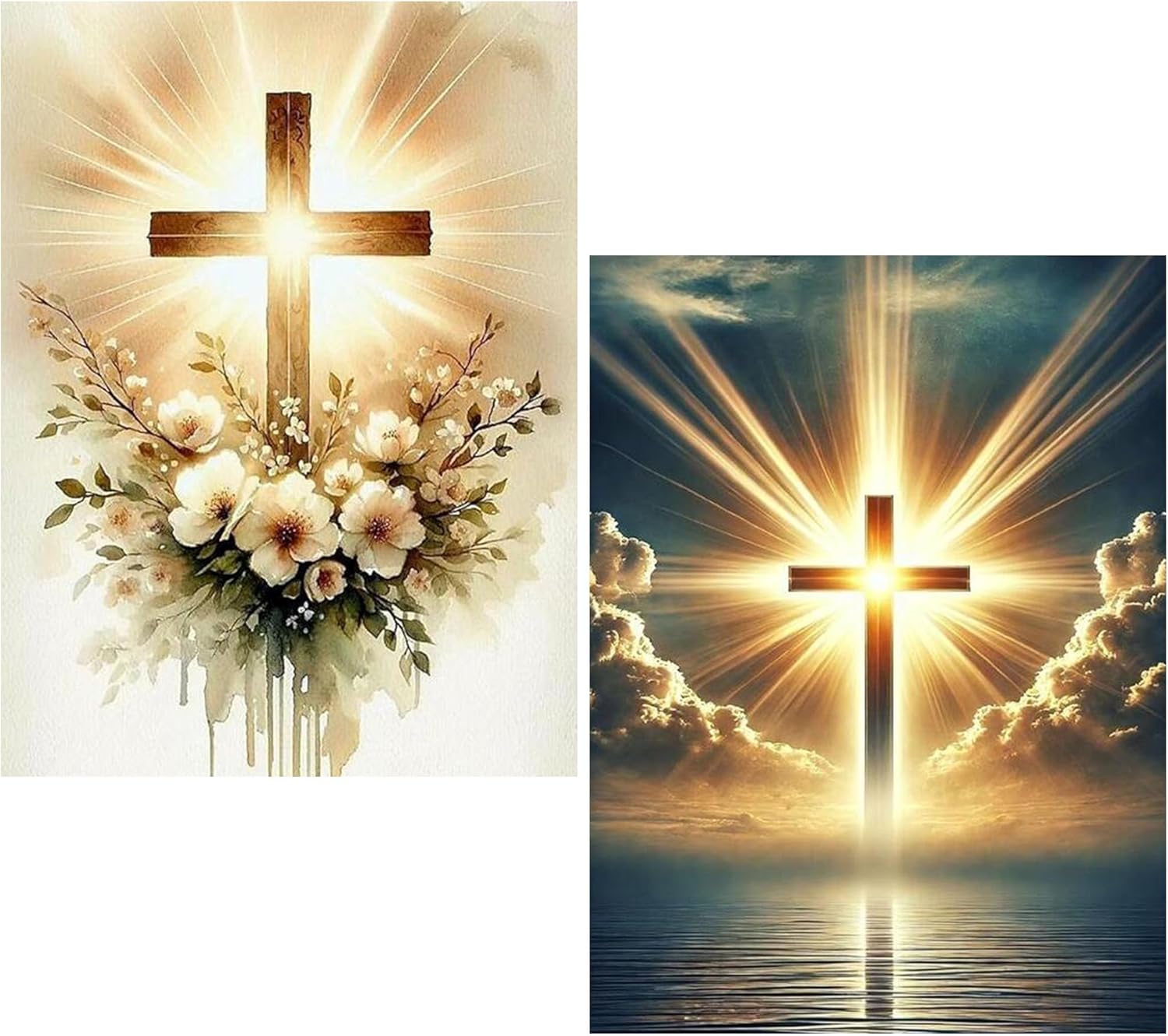

When I look at these different versions, I sometimes think of the various ways Christ has met me across the years: sometimes gently, sometimes firmly, sometimes in quiet, sometimes in surprising ways. No single painting can capture the fullness of that mystery, but each can hint at one aspect of His nearness. Choosing a particular Jesus hand reaching out painting can be a way of recognizing how you personally tend to experience God’s presence—perhaps in calm, perhaps in strength, perhaps in a mixture of both.
FAQ about living with a Jesus hand reaching out painting
1. Is it okay to have a Jesus hand reaching out painting in a bedroom or private space?
Yes. Many Catholics keep sacred images in their bedrooms, home offices, or other personal spaces. A Jesus hand reaching out painting can be especially fitting in a private room where you begin and end your day, since it can gently prompt short, honest prayers. The important thing is that the image helps you live your faith more sincerely, not that it follows a specific rule about placement.
2. How can I use the painting without turning my prayer into something mechanical?
The key is to treat the painting as a help, not as the center of your prayer. You might start or finish your time of prayer by looking at the image for a moment, but let your focus rest on speaking with the Lord in your own simple words. On days when you feel distracted, you can glance back at the outstretched hand as a way of refocusing, but you do not have to follow any rigid routine. Let the image quietly support, not replace, your inner conversation with God.
3. What size of Jesus hand reaching out painting works best in a home?
The best size depends on your space. In a small apartment or bedroom, a medium-sized canvas usually works well: large enough to be visible from across the room, but not so big that it dominates the wall. In a hallway or above a couch, a larger piece can be meaningful. Many people prefer a size that feels easy to live with over time, not overwhelming or tiny, but proportionate to the room and the surrounding furniture.
4. Is it okay to have more than one image of Jesus in the same room?
Yes, that is very common in Catholic homes. For example, you might have a crucifix on one wall and a Jesus hand reaching out painting on another, or a Divine Mercy image along with a smaller depiction of the Sacred Heart. The important thing is that the room does not feel cluttered or confusing, and that the images help you pray with more focus and reverence. Sometimes placing one main image in a central spot and others in quieter corners keeps a good balance.
5. How do I explain this kind of painting to guests who are not Catholic?
You might simply say that it is an image that reminds you of Christ’s nearness and care, especially in everyday life. You do not need to give a long explanation. Many people, even those who do not share the faith, can understand the idea of a picture that brings comfort or helps you stay grounded. If someone asks more questions, you can share how the Jesus hand reaching out painting has quietly supported your own prayer—without pressure, just as a personal experience.