
Jesus healing painting
Jesus Healing Painting
A Jesus healing painting is not just decoration for a wall. It can become a gentle reminder of the Lord’s presence in the middle of ordinary days, especially in moments marked by sickness, worry, or simple tiredness. Many Catholics quietly keep such an image in their homes as a way to hold their hearts before Christ, without many words and without any pressure to feel or achieve anything special.

This page contains affiliate links. If you click and buy, I may earn a commission at no extra cost to you
What a Jesus healing painting can mean at home
When I think about a Jesus healing painting, I think about those quiet moments in the evening when the house finally calms down. The noise settles, the phone is put away, and the light on a holy image becomes almost the only thing gently shining in the room. In those moments, I find myself simply looking at the face of Christ and remembering that every part of my day, including the hard and messy parts, rests in His hands.
Many Catholic families place an image of Jesus healing someone in a place where people naturally pass by: the hallway, the living room, the entryway. It becomes a silent companion. We are not expected to have perfect thoughts every time we see it. Sometimes we just glance and keep walking. But over months and years, that faithful presence can nudge our hearts back toward prayer, one small step at a time.
A scene of Jesus healing, whether He is reaching toward a sick person, touching tired hands, or looking with compassion toward a crowd, quietly tells the story that the Gospels have handed down to us. For many, it brings to mind the tenderness of Christ’s heart and His attention to those who suffer, whether in body, mind, or spirit.
In my own home, a small Jesus healing painting hangs near the door. On busy mornings, I often rush past it with coffee in hand. But on days when someone in the family is not well, or when a difficult phone call has just ended, I tend to stop there for a second. I do not say much. I simply pause, looking at the scene, and quietly place that person into the hands of Christ. That small habit has carried me through many heavy days.
Simple ways this image fits daily life
- Near a bedside as a gentle reminder during sickness or recovery
- In the living room where the family gathers for evening prayer or quiet time
- By the front door, to entrust the day to Christ before stepping out
- In a small prayer corner alongside a crucifix and a rosary
- In a workspace to remember God’s presence in a stressful job or long hours
None of this needs to be complicated. A painting like this can simply be there, quietly. On days when prayer feels easy, it can deepen our gratitude. On days when prayer feels dry or distant, it can at least keep our eyes turned toward the One who knows us and sees our burdens.
Looking closely at the scene of healing
Many Jesus healing paintings draw inspiration from the scenes described in the Gospels, such as Christ reaching out to the sick, touching the eyes of the blind, or standing in the middle of a hopeful crowd. If you have time, it can be helpful to sit quietly in front of the image and slowly take in the details: the posture of Jesus, the expressions on the faces, the way light and color draw your eye toward certain parts of the scene.
I sometimes like to imagine myself somewhere within the painting. Am I the person asking for healing? Am I standing a bit further back, watching in silence? Am I someone guiding a friend to Jesus? This kind of quiet reflection is not about forcing feelings, but letting the heart rest for a while in the story the painting is telling.

Art that shows Jesus healing often carries a deep sense of calm, even when the person being healed is clearly in pain or trouble. The faces may show longing, hope, or relief. Jesus is usually the center, yet the people around Him matter too. They represent all of us who come with different wounds, some visible, some hidden.
A painting like this can also become a gentle companion when reading the Bible. For example, the healings described in the Gospels of Jesus can feel more concrete when we have an image to look at. Reading the story and then looking at the painting can help the heart linger a little longer with the mystery of Christ’s compassion.
I remember one particular season when a close friend was facing serious health issues. I often felt helpless, unsure what to say. Many evenings, I would sit near our Jesus healing painting and simply whisper my friend’s name, trusting that the Lord knew the rest. Looking at the gentle way Christ’s hand reached out in the image somehow steadied me. It did not erase the suffering, but it helped me stay present in prayer, even when words were few.
Creating a quiet prayer corner with a Jesus healing painting
Many Catholics find it helpful to dedicate a small part of the home to prayer: a corner of a bedroom, a small table in the living room, or even a space on top of a dresser. A Jesus healing painting fits very naturally into such a corner, especially for families walking through illness, grief, or long-term stress.

Simple elements for a small prayer space
- A Jesus healing painting hung at eye level, so it is natural to look at
- A small crucifix or cross nearby, to remember Christ’s sacrifice and love
- A rosary placed on a table or neatly hung, easy to reach for at any time
- A candle or small lamp, lit during times of prayer or reflection
- A notebook or journal, for writing down names or intentions to hold before God
A space like this does not need to be impressive or especially beautiful. Even a very simple setup can become precious over time because of the memories it holds: the evenings when you prayed for a sick parent, the mornings when you entrusted a difficult day at work, the nights when a child asked hard questions about suffering and you stood there together, looking at the healing Christ.
In my family, we sometimes stood in front of our Jesus healing painting before a medical appointment. We did not say long prayers. Often it was just, “Lord, be with us,” and a moment of silence. Those small pauses did not remove our fears, but they helped us carry them with a bit more peace.
How a Jesus healing painting can support family life
Illness, worry, and exhaustion are part of almost every family’s life at one time or another. Some seasons are intense, with hospital visits, medications, and uncertainty. Other times the burdens are quieter but still heavy: anxiety, depression, or ongoing stress. A Jesus healing painting does not solve these realities, but it can gently accompany them.

Children, especially, often respond naturally to visual images. A child who is afraid at night or nervous about school might find comfort in looking at a painting of Jesus gently touching someone who is sick or distressed. Parents can use the image to spark simple, honest conversations about how Jesus cares for those who are suffering, without giving complex explanations or easy answers.
Some families choose a specific time of day, perhaps after dinner or before bedtime, to gather briefly near such an image. They might name people who are sick, light a candle, or pray a short prayer together. Over time, these small rituals become woven into the family’s story, offering a rhythm of turning again and again to Christ.
I have noticed in my own life that, during stressful weeks, I am more likely to pause in front of the Jesus healing painting without even planning it. I will be passing by with a stack of dishes or a bag of groceries and suddenly feel the need to stop, breathe, and silently place everything I am carrying into God’s hands. That habit has grown slowly over years, helped simply by the steady presence of the image on the wall.
Design, size, and placement considerations
When choosing a Jesus healing painting for your home, it can help to think about where it will live and how it will blend with the rest of your space. Some prefer a large, striking image that becomes the main focus of a room. Others feel more at peace with a smaller, more discreet painting that quietly accompanies their days without drawing too much attention.

Things you might gently consider
- Color and mood: Do the colors feel peaceful and prayerful to you? Some prefer soft tones; others are drawn to stronger contrasts.
- Facial expressions: Does the face of Jesus in the painting help your heart turn toward trust and prayer?
- Size: Will the painting feel balanced on the wall where you plan to place it?
- Frame style: Simple frames can fade into the background, letting the image itself speak.
- Lighting: Is there natural or soft light nearby that will gently highlight the painting without glare?
I once placed a Jesus healing painting in a hallway without thinking too much about lighting. It looked dull and easy to overlook. Later I moved a small lamp nearby, and suddenly the image felt alive in the evenings. That small change helped me notice it more often and naturally turn my mind toward prayer while walking by.
Personal experiences with a Jesus healing painting
Over the years, my relationship with our Jesus healing painting has gone through quiet changes. At first, it was simply a beautiful piece on the wall, something that reminded me generally of God’s presence. But as life unfolded, especially during times of sickness and fear, it became more personal.
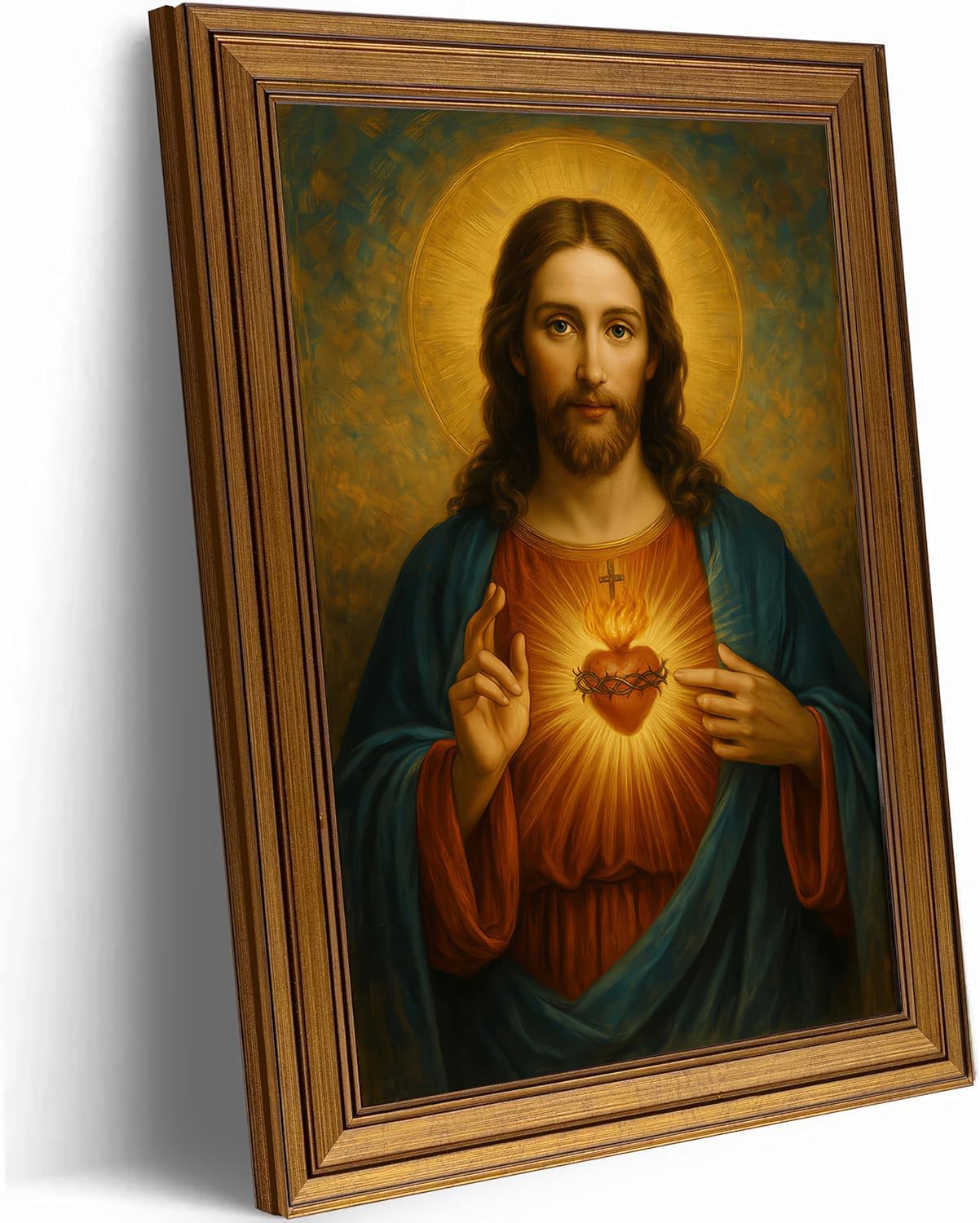
I remember a winter when someone close to me spent many weeks in the hospital. Those days were full of long drives, waiting rooms, and difficult news. Late at night, coming home tired, I would often find myself stopping in front of the Jesus healing painting almost without thinking. I would stand there for a moment and let the events of the day surface in my heart—fear, sadness, hope, confusion. I rarely had polished prayers to offer, but I knew that Christ saw and understood all of it.
The scene in the painting showed Jesus leaning toward a person on the ground, a hand outstretched, eyes full of compassion. Seeing that again and again did not make the suffering disappear, but it helped me remember that we were not walking through it alone. Over time, that image came to feel like a quiet friend in the house, one that understood both the weight and the dignity of our struggles.
Years later, when things were calmer, I still found comfort in that same Jesus healing painting. It began to speak to me not only of physical illness, but of the daily wounds we all carry: disappointments, broken relationships, worries about the future. The image reminded me that the Lord cares about those inner burdens too, even when they are hard to name out loud.
Different angles on the same quiet presence
Some Jesus healing paintings focus tightly on the encounter between Jesus and one person. Others show a wider scene with a crowd watching, each face telling a different story. Looking at more than one image over time can open new paths of reflection and prayer, even if you end up choosing just a single painting for your home.

You might notice yourself drawn more strongly to one type of composition than another. That natural attraction is worth listening to. Often, the image that quietly stays in your mind after you stop looking at it is the one that may serve you best in prayer in the long run.
When I was first looking for a Jesus healing painting, I thought I wanted a very dramatic scene. Over time, I realized I was more at peace with a gentler, more intimate image where the faces were calm and the colors were soft. There was no right or wrong choice—only the question of which image helped my heart rest more easily in God’s presence.
Quietly living with sacred art day by day
Living with a Jesus healing painting is not about having constant spiritual feelings or dramatic moments. Most days, the image simply hangs on the wall, and life moves quickly around it: school runs, work emails, laundry, dishes, and late-night TV. But every now and then, we look up and meet the gaze of Christ in that painting, and something gentle shifts inside.

For many Catholics, having such an image nearby simply makes it easier to pray in the middle of ordinary life. A quick glance while passing by, a short pause before leaving the house, a moment of stillness at the end of a long day—these small gestures gradually become familiar ways of turning toward God.
Over time, a Jesus healing painting can gather many stories: people we have prayed for, worries we have carried, gratitude we have felt. It quietly becomes part of the spiritual memory of the home, even if visitors see only “a nice picture on the wall.” Inside the family, it may be much more than that: a silent witness to many hidden prayers.
Frequently asked questions about keeping a Jesus healing painting at home
1. Where is a good place to hang a Jesus healing painting?
Many people like to place it where they naturally pass during the day: near the front door, in the living room, or by the stairs. Others prefer a more private spot, such as a bedroom or a small prayer corner. The best place is usually where you will actually see it often enough to let it gently remind you of Christ’s presence, without feeling out of place in your home.
2. How can this kind of painting support prayer during sickness?
A Jesus healing painting can be a quiet help when words are hard to find. Simply sitting or standing in front of the image, perhaps lighting a candle and naming a person who is sick, can be a simple, honest way to pray. The painting does not replace the sacraments or any other form of prayer, but it can hold your attention and gently turn your heart toward trust in God’s care.
3. Is it appropriate to place a Jesus healing painting in a bedroom or near a hospital bed?
Yes, many Catholics find it comforting to keep such an image near someone who is ill or recovering. A bedroom wall, a nightstand, or a nearby shelf can be good places. It can be helpful to ask the person who is sick whether the image gives them peace and comfort, and to respect their preferences about exactly where it should be placed.
4. How can families pray together using a Jesus healing painting?
Families might gather briefly near the painting, especially when someone is sick, worried, or facing a difficult day. A simple way is to name people who need prayer, perhaps place a hand on the shoulder of the person who is suffering, and pray a short prayer together. Some families choose to pray a decade of the rosary, others just a few heartfelt words. The key is honesty, simplicity, and trust, not length or formality.
5. Does a Jesus healing painting “do” anything by itself?
The painting itself is made of ordinary materials: canvas, paper, wood, and ink or paint. It does not cause events or guarantee any specific outcome. Its meaning lies in how it helps us remember God, turn toward Christ, and bring our hearts honestly into prayer. Over time, the image can become precious because of how God has met us while we looked at it, not because of anything magical in the object itself.