
Leonardo da Vinci Jesus painting
Leonardo da Vinci Jesus Painting
Bringing the quiet gaze of Christ into a home is something many of us do slowly, over time, as our faith deepens in ordinary days. A Leonardo da Vinci Jesus painting print can become one of those steady companions on the wall: always there, never loud, gently drawing the heart toward prayer, even in rushed seasons of life.
When we think of a Leonardo da Vinci Jesus painting, we usually remember the calm, human face of the Lord that Leonardo painted with so much attention to detail and light. Having a print of that kind of image at home does not change our life overnight, but it can quietly shape the way we step into each day, and the way we end each evening, with our eyes resting for a moment on Christ.

This page contains affiliate links. If you click and buy, I may earn a commission at no extra cost to you.
Why a Leonardo da Vinci Jesus painting belongs in everyday Catholic life
Most Catholic homes I have visited have at least one image of Christ on the wall. Sometimes it is very simple, sometimes framed with great care, but it is almost always close to a place where people pass often: near the dining table, beside a hallway, or over a small prayer corner. A Leonardo da Vinci Jesus painting print fits right into that pattern. It is familiar, gentle, and rooted in a long Christian artistic tradition.
In my own living room, I have a print of Jesus inspired by Leonardo’s way of painting the face and eyes. It is not large or dramatic. It just hangs there, above a small table with a candle and a worn rosary. I do not stand in front of it every day with some big plan. Instead, it has become part of the room, like the light switch and the bookshelf. Yet I notice that when I am worried, my eyes almost automatically find His face for a brief second. That pause itself has become a quiet form of prayer for me.
A print like this does not need to be reserved for “holy” corners only. It can sit above a desk where you pay bills, near the spot where you set down your keys, or even in a bedroom where you read before sleep. The Lord’s presence in art is not limited to one space. The important thing is that His image is somewhere you can see without effort, so that your heart can turn toward Him in small, natural ways.
One of the strengths of a Leonardo da Vinci Jesus painting is the very human expression it offers. The face is not distant; it is close, almost tender. That can make it easier to sit with the image when we are tired or discouraged. It feels like a face that understands, not one that stands in judgment. Of course, it is still just a picture, painted by a human hand. But the way it points toward Christ can help us remember that He walked among real people, in ordinary streets and homes, just as we do.
How a Leonardo da Vinci Jesus painting quietly shapes daily routines
For many Catholics, prayer is woven into daily life in small moments: a sign of the cross in the morning, grace before meals, a few Hail Marys between tasks. A sacred image on the wall can become like a gentle bell, reminding us of God’s presence without making a sound. We catch sight of it as we pass by and maybe pause for just a breath, or whisper a simple, honest sentence to the Lord.
A print of Jesus in the style of Leonardo lends itself to this kind of prayer very well. The eyes in his paintings often look both focused and distant, as if they are seeing beyond what we see. When you place such an image in a spot you walk past many times a day, those eyes can help you lift your thoughts to God, even if only for a second. It is not about saying many words, but about remembering you are not alone.
Over time, this can gently change the way a home feels. When guests arrive, they may notice the painting and sense that faith is simply part of the house, as natural as the furniture. Children may grow up seeing the Lord’s face as something familiar, not strange or hidden away. And for those living alone, the image can be a steady reminder that Christ is near, even in quiet or lonely evenings.
I have noticed something simple in my own routine. When I come home and drop my bag on the chair, my eyes go straight to the Leonardo da Vinci Jesus painting print near the door. Without planning it, I often just tell the Lord how the day went in one or two sentences. It is not a formal prayer; it is more like telling a friend, “That was a long day, but thank You for getting me through.” The image has become part of that small ritual.

Placing a Leonardo da Vinci Jesus painting in your home
Choosing where to place a sacred image is a personal decision. There is no strict rule, but there are a few gentle guidelines that many Catholics find helpful. The main thing is to place the image where it can actually serve prayer and reflection, rather than just filling an empty space on the wall.
- Near a small prayer table with a Bible, a rosary, and perhaps a candle.
- Above or beside the dining area, where family grace is said.
- Close to the main entrance, as a reminder when leaving and returning home.
- In a bedroom, in a place you see when you wake up and before you fall asleep.
- Near a desk or workspace, to keep the day anchored in a sense of God’s presence.
A Leonardo da Vinci Jesus painting naturally draws attention to the face of Christ, so it can be especially meaningful in a space where you sit and reflect. Some people like to place it at eye level so that, when seated, they can meet the Lord’s gaze. Others prefer a slightly higher placement, so the image seems to “watch over” the room in a gentle way. Either way is fine; what matters is that you feel at peace when you look at it.
Framing also plays a role. A simple, sturdy frame is usually enough. You do not need anything fancy or expensive. What matters more is that the frame protects the print and makes it feel cared for. When I finally framed my own Leonardo-style Jesus print after leaving it unframed for a long time, it felt a little like making a promise to treat that prayer corner with more respect. Sometimes these small acts help us pay more attention to the presence of Christ in our homes.

Praying with a Leonardo da Vinci Jesus painting
Praying in front of an image does not mean we are praying to the paper or the paint. We are turning our hearts toward the Lord whom the image represents. For many Catholics, having a clear, gentle face of Christ in front of them helps their mind settle. Instead of wandering, the eyes have somewhere to rest, and the heart finds it easier to speak honestly to God.
A Leonardo da Vinci Jesus painting, with its soft lines and thoughtful expression, can help with this kind of prayer. You might sit in a quiet chair, look at the painting, and slowly tell the Lord what is on your mind: worries about family, gratitude for small blessings, or confusion about decisions. There is no script required. The image is not a magic tool; it is a reminder that Christ truly sees and knows you.
Sometimes, I simply sit in front of my Leonardo-style Jesus image and stay silent. I do not always have the right words, especially at the end of a difficult week. In those moments, I look at His face for a little while and let the silence be my prayer. Even if I feel nothing, the act of turning my gaze to Him still matters. It is a simple way of saying, “I am here, Lord, and I know You are here too.”
Families can also pray together around a painting like this. A short decade of the Rosary, a Psalm read aloud, or even a simple “Jesus, I trust in You” prayed together before bed can all take place in front of the image. Children often remember these small rituals far into adulthood. Long after they have left home, the memory of praying beneath a familiar face of Christ can stay with them.
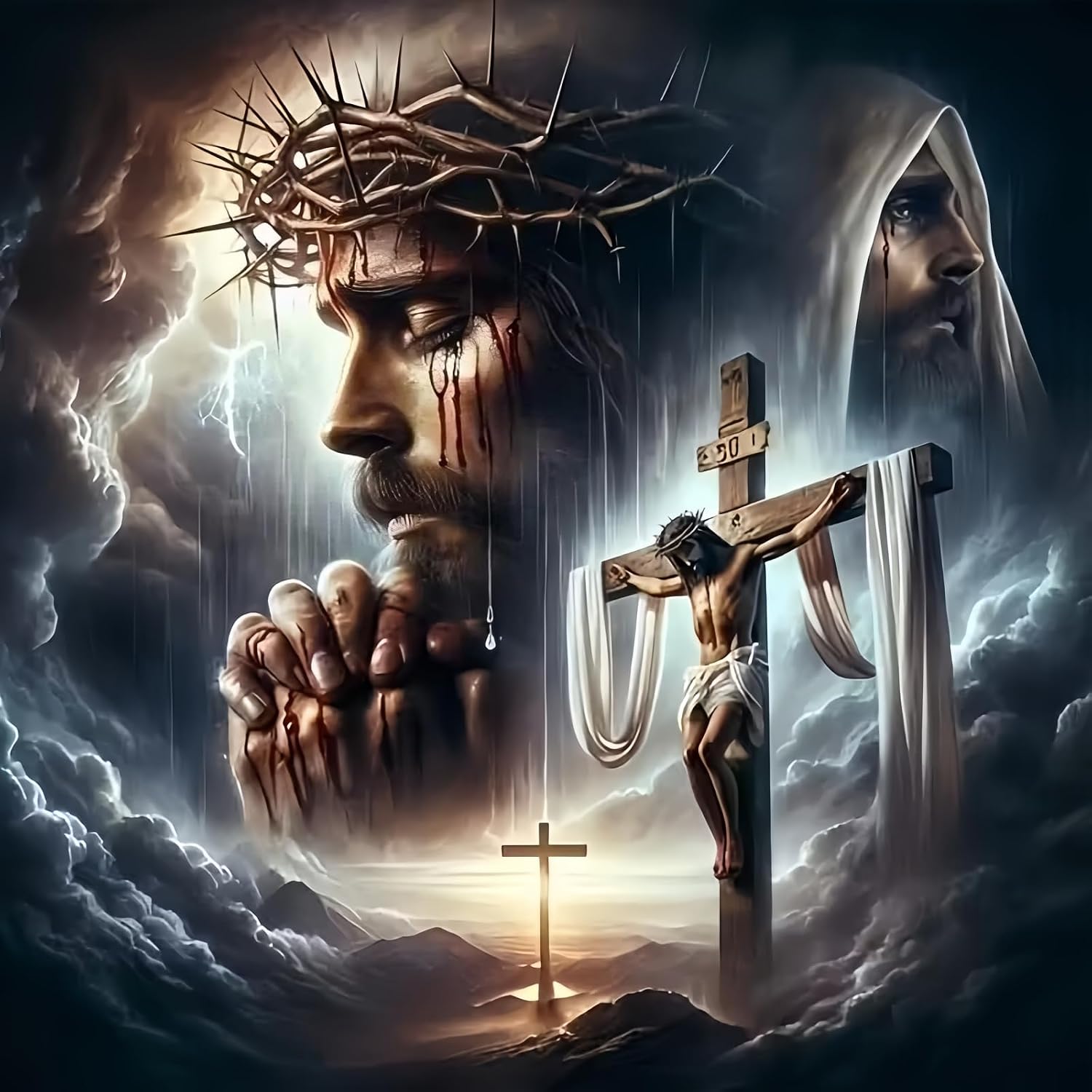
Personal experiences with a Leonardo da Vinci Jesus painting
Over the years, I have had different religious images in my home, but the one that has stayed the longest is a print based on a Leonardo da Vinci Jesus painting. It has moved from apartment to apartment with me. At first, I hung it a bit awkwardly in a hallway. Later, I gave it a better place in the living room. Each time I moved, I realized that finding a spot for that image was one of the first things I did. It felt like setting the tone for the new home.
One memory stands out. There was a period when work was very uncertain and I was constantly worried. One evening, I sat down in front of the painting, almost without thinking. I remember just saying, “Lord, You know what I need. I do not even know how to ask.” I did not feel any sudden peace or answer, but I stayed there quietly for a few minutes, looking at His face. In the weeks that followed, whenever the anxiety rose again, that moment came back to mind. The painting had given me a place to “leave” my worries, even if only symbolically.
Another time, a friend visited and noticed the Leonardo da Vinci Jesus painting on the wall. She said she had grown up with a similar image in her parents’ home and that seeing it again in my living room made her feel unexpectedly calm. We ended up talking about our childhood faith experiences and the ways our parents and grandparents showed us what it meant to trust God in daily life. That conversation might never have happened without the painting as a starting point.
These experiences remind me that sacred images are not decorations to impress anyone. They are quiet companions that support us on our personal journey with the Lord. A Leonardo da Vinci Jesus painting, in particular, brings together beauty, tradition, and a very human face of Christ. It can be there when we wake in the middle of the night, when we come home tired, or when we celebrate small joys around the table.

Different styles and sizes of Leonardo da Vinci Jesus painting prints
Today there are many different reproductions of Leonardo’s paintings of Christ. Some are very close to the original look, while others soften the colors or adjust the lighting slightly. There are canvas prints, framed prints, and simple paper posters. For a Catholic home, the best choice is usually the one that supports reverence and fits naturally into your space.
Smaller prints can be helpful for prayer corners, desks, or bedside tables. They create a sense of intimacy, almost like a small icon. Larger prints work better in living rooms or hallways, where they can be seen from a distance. A mid-sized Leonardo da Vinci Jesus painting often balances both: clear enough to notice, but not overwhelming in the room.
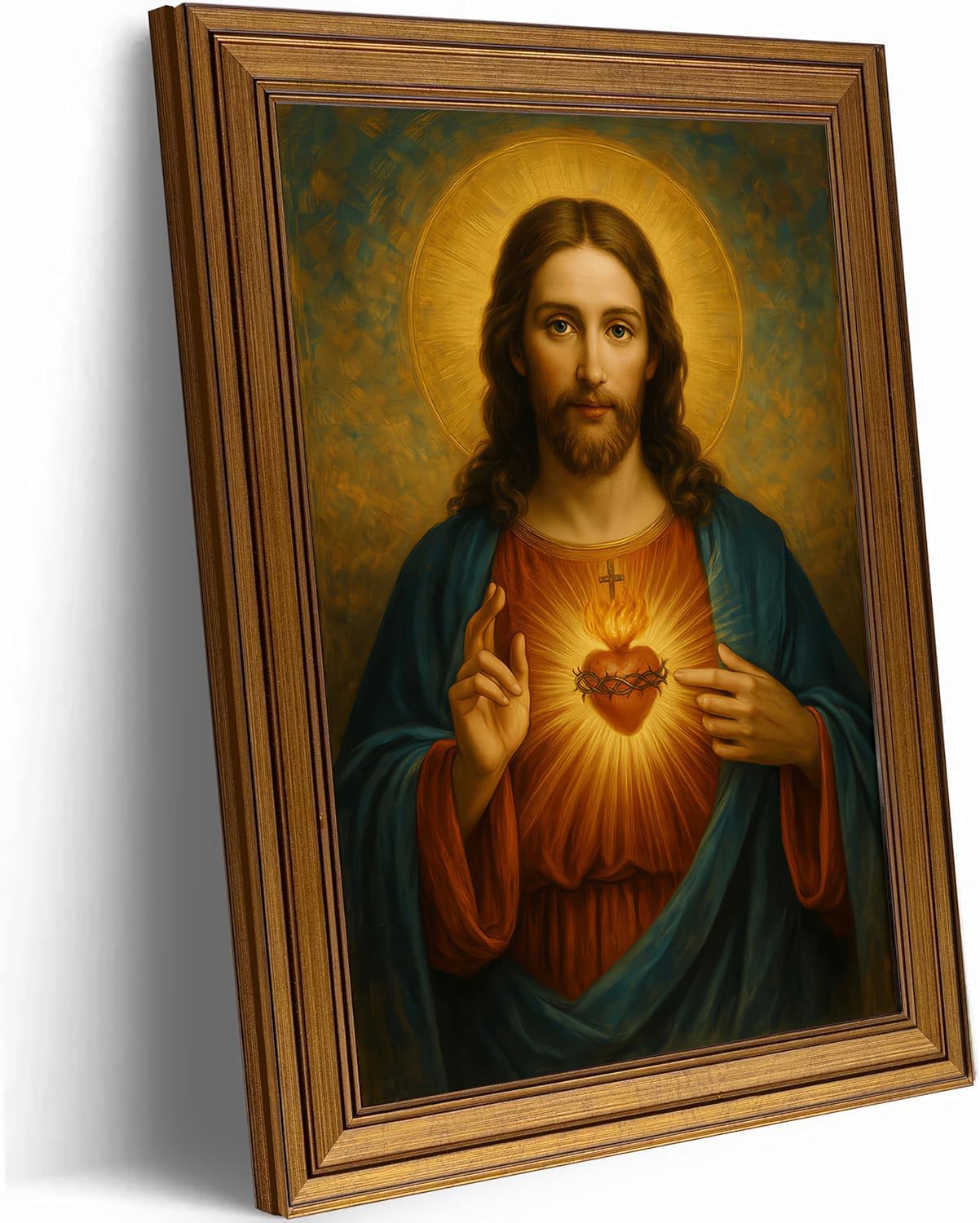
Canvas prints can give the image a more “painted” feel, with texture that echoes a real painting. Framed prints behind glass tend to feel more formal and can be easier to dust and clean. Some people prefer a very simple, light frame that blends with their walls, so that the focus stays on the face of Christ and not on the frame itself.
In my home, I have tried both framed and unframed prints of the Leonardo-style Jesus. I eventually chose a modest wooden frame with a quiet color. It does not draw attention to itself, but it protects the print and makes it feel intentional. Looking back, I realize that this slow process of choosing and adjusting was part of my own effort to make space for the Lord within my everyday surroundings.
Gifting a Leonardo da Vinci Jesus painting
Giving a sacred image as a gift is a delicate thing. It is not like giving a book or a kitchen tool. You are offering something that can become part of someone’s prayer life and daily environment. For that reason, many Catholics reserve such gifts for special moments: baptisms, confirmations, weddings, house blessings, or significant anniversaries.
A Leonardo da Vinci Jesus painting print can be a gentle gift in these situations, especially for someone who appreciates art or has a quiet, reflective faith. Because Leonardo’s work is widely recognized, it does not feel unusual or hard to understand. Even people who are not very familiar with religious art often respond to the peaceful expression and soft colors of his Christ images.
When giving such a gift, it can help to include a simple note. You might write something like, “I hope this image of Jesus brings a sense of peace to your home,” or “May this picture remind you that Christ walks with you in every season.” No long explanation is needed. The painting itself will slowly find its place in the person’s home and life.
I once gave a small Leonardo da Vinci Jesus painting print to a relative who was going through a difficult time. I worried it might be too much or feel heavy. Months later, she mentioned that she had put it on a small shelf near her bed and that, though she did not always pray with it, it helped her fall asleep knowing that Christ’s face was the last thing she saw at night. Hearing that reminded me how gently God can work through the simplest things.
FAQ about having a Leonardo da Vinci Jesus painting at home
1. Is a Leonardo da Vinci Jesus painting appropriate for a Catholic prayer corner?
Yes, a reproduction of a Leonardo da Vinci Jesus painting is very suitable for a Catholic prayer space. For centuries, the Church has welcomed sacred art that helps the faithful lift their hearts and minds to God. A respectful image of Christ, especially one rooted in Christian tradition, can support personal and family prayer. The important thing is to treat the image with reverence and to remember that it points to the living Lord, not to the artist or the paper itself.
2. Where in my home should I hang a Leonardo da Vinci Jesus painting?
Many Catholics choose a place where they naturally pause during the day: near a dining table, above a small table with a Bible and rosary, or in a bedroom. Some like to place it near the front door as a reminder when entering and leaving the house. Others prefer a quiet corner dedicated to prayer. There is no single “right” place; choose a spot where you can see the image easily and where you feel at peace when you look at it.
3. How can I pray in front of a Leonardo da Vinci Jesus painting?
You can pray very simply. Sit or stand in front of the painting, make the sign of the cross, and then speak to the Lord as you would to a close friend. You might pray formal prayers like the Our Father, or you might quietly share your worries and hopes. You can also pray the Rosary, a Chaplet, or read a short passage of Scripture while glancing at the face of Christ from time to time. The image is there to help your heart stay focused, not to add pressure or demands.
4. Is it respectful to have a Leonardo da Vinci Jesus painting in a busy room like the living room?
Yes, it can be very respectful to place a sacred image in a room where people gather. In fact, many Catholic families keep images of Christ or the Holy Family in their living rooms, where much of daily life happens. The key is to avoid placing the painting in a spot where it could be easily damaged or treated casually, such as directly above a television or near clutter. If the room is busy but the image is treated with care and attention, it can be a quiet witness to Christ’s presence in everyday life.
5. What size Leonardo da Vinci Jesus painting is best for prayer and reflection?
The best size depends on your space and how you plan to use the image. A small print near a bedside or on a prayer table can create an intimate setting for personal prayer. A medium-sized painting works well in a family prayer corner or hallway. Larger prints suit living rooms or areas where you want the image to be visible from across the room. What matters most is that the size feels natural in your home and does not dominate the space in a way that distracts from quiet reflection.
Quietly exploring Leonardo da Vinci Jesus painting prints online
If you are considering welcoming a Leonardo da Vinci Jesus painting into your home, you may find it helpful to look slowly at different reproductions. Notice which expressions and colors draw your heart toward prayer rather than just your eyes toward decoration. Trust that gentle sense of “this feels right” when you see an image that helps you imagine standing before the Lord Himself.
Take your time. Sacred art does not need to be chosen in a rush. Whether you are setting up your first small prayer corner or adding another image to a home already filled with reminders of God’s presence, the process can itself be a kind of prayer. Asking the Lord to guide your choice, even in something as simple as a painting, is another way of inviting Him deeper into your daily life.
